Bahasa Indonesia


TransTRACK Drives Electric Vehicles Transformation in the Mining Sector, Introducing EV Solutions with Zero CAPEX and Integrated Monitoring System
Posted on March 5, 2026 by Nur Wachda Mihmidati
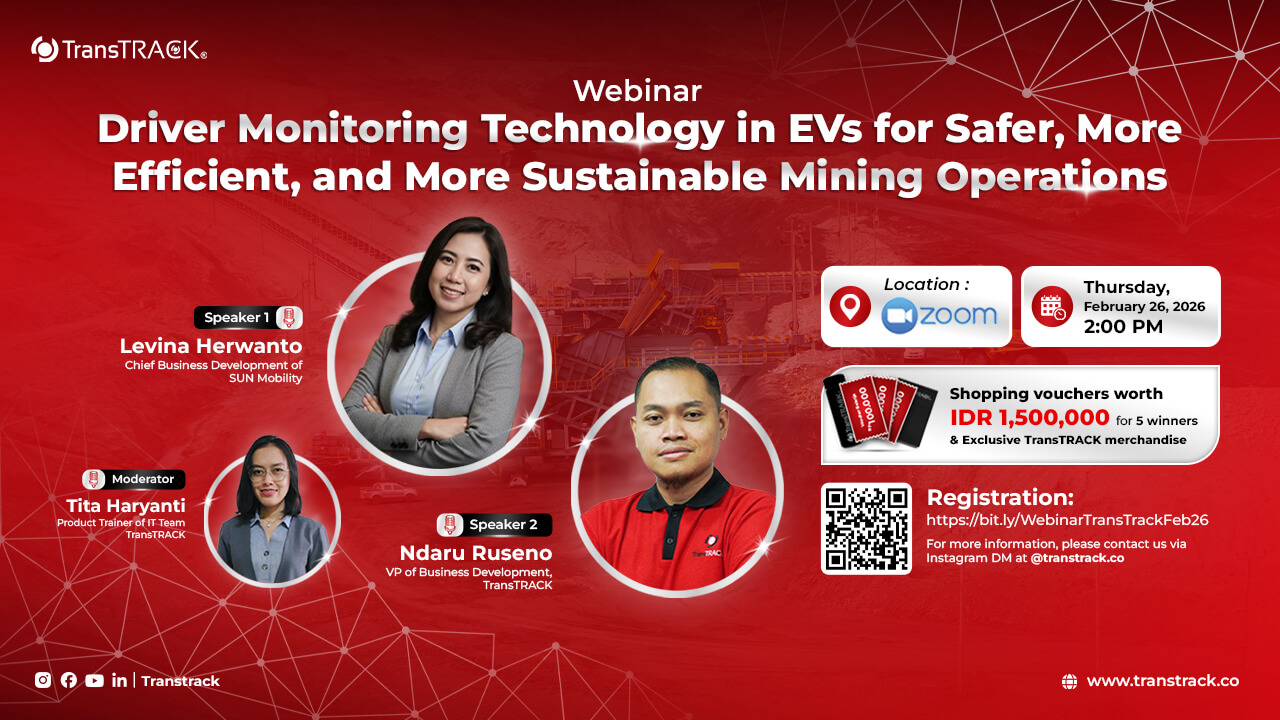
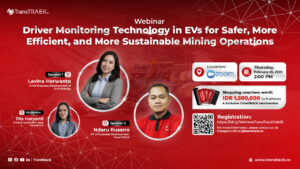
Jakarta, March 5, 2026 — The transformation of electric vehicles (EVs) in the mining sector was the main focus of a webinar titled “Driver Monitoring Technology in EVs for Safer, More Efficient, and More Sustainable Mining Operations,” which was successfully held on February 26, 2026. The webinar featured two main speakers, namely Levina Herwanto, Chief Business Development of SUN Mobility, and Ndaru Ruseno, VP of Business Development of TransTRACK.
This TransTRACK webinar discusses the role of technology in driving EV adoption in the mining industry, while emphasizing the importance of data-driven safety systems such as Driver Monitoring Systems (DMS) in improving productivity and operational efficiency.
In her presentation, Levina Herwanto explained that one of the biggest challenges in adopting electric vehicles in the commercial and mining sectors is the high initial investment (CAPEX), where the price of electric vehicles can be 1.5 to 2 times higher than diesel vehicles.
“The biggest challenge in adopting electric vehicles in mining is the high CAPEX. EV prices can be 1.5 to 2 times higher than diesel vehicles. Therefore, we offer an end-to-end solution without CAPEX, so that industry players can immediately transform without the burden of initial investment,” said Levina Herwanto, Chief Business Development of SUN Mobility.
As the orchestrator of EV transformation in the commercial industry, SUN Mobility provides end-to-end solutions based on plug-and-play without CAPEX for industry players. These solutions include fleet planning, financing, maintenance, spare parts availability, and charging infrastructure provision. Users simply provide their operational location data, and the SUN Mobility team will analyze whether a substation is required or if a standard charging station will suffice.
Amid rising mining operating costs and falling coal prices, cost optimization has become a matter of urgency. The switch to EVs is estimated to deliver potential savings of up to 85%, depending on the source of electricity used. For nickel mines, the demand for sustainable energy is also increasing, making EVs part of long-term sustainability strategies.
Responding to concerns about EV safety in rugged mining terrain, Levina emphasized that EVs actually have an advantage thanks to their regenerative braking system, which recharges the battery with energy generated when the vehicle is descending. In addition, the greater torque of electric vehicles provides stronger traction, with battery systems that have undergone various safety tests and additional protection.
Significant changes after the implementation of EVs in mining are not only seen in terms of costs, but also in work patterns that have become more disciplined, especially in charging management. Operational data has become more transparent, richer, and can be analyzed comprehensively.
For charging, the duration depends on the charger capacity: DC charging can take 30–45 minutes, while AC chargers generally require overnight charging. With proper route planning, EV vehicles can operate approximately 2–3 days before recharging.
In terms of safety and operational technology, Ndaru Ruseno explained that TransTRACK provides end-to-end solutions in the mining sector, ranging from global SIM card and satellite connectivity, sensor-based IoT devices, to AI-based platforms and data analysis.
TransTRACK itself has implemented more than 6,000 units of devices in various mining locations in Indonesia, both on non-EV and EV vehicles.
The solutions implemented include various devices and sensors such as 360° cameras, Advanced Driver Assistance System (ADAS), Driver Monitoring System (DMS), temperature sensors, PTO monitoring, fuel monitoring, speed buzzers, two-way communication, and driver behavior analysis (driver behavior).
The greatest risks in mining operations often stem from human factors, such as drivers smoking while driving, falling asleep, or wearing sunglasses that interfere with visual monitoring systems. With the implementation of DMS, ADAS, and seatbelt sensors, potential risks can be significantly reduced through early detection and real-time alerts.
“The biggest risk in mining operations often comes from human factors. With Driver Monitoring System and ADAS, potential risks such as drowsy or distracted drivers can be detected early on,” said Ndaru Ruseno, VP of Business Development at TransTRACK.
According to Ndaru, the implementation of DMS on EVs in mining not only improves safety, but also has a direct impact on increasing productivity and reducing operational costs. Drivers become more confident because they feel safer, while management gains more comprehensive data visibility for analytical-based decision making.
Both sources agreed that the key to the successful implementation of EV and monitoring technology in mining is a readiness in mindset and long-term strategy.
Ndaru emphasized the importance of agreeing on “golden rules” prior to system installation, so that all stakeholders understand safety and data governance standards from the outset. Meanwhile, Levina asserted that EV adoption should be viewed as a strategic step in the industrial sustainability movement.
Looking ahead, in the next 5–10 years, monitoring technologies such as DMS and IoT systems are predicted to become mandatory in the mining industry. Technological developments will become increasingly widespread, and every industry player will be required to adapt to higher safety and efficiency standards.
This webinar emphasized that the integration of electric vehicles and data-based monitoring technology is not just a trend, but rather the foundation for safer, more efficient, and more sustainable mining operations in Indonesia
Recent Post




Topic :