Bahasa Indonesia


Reduce Dwelling Time at Ports with the TransTRACK Truck Appointment System
Posted on January 23, 2026 by Nur Wachda Mihmidati
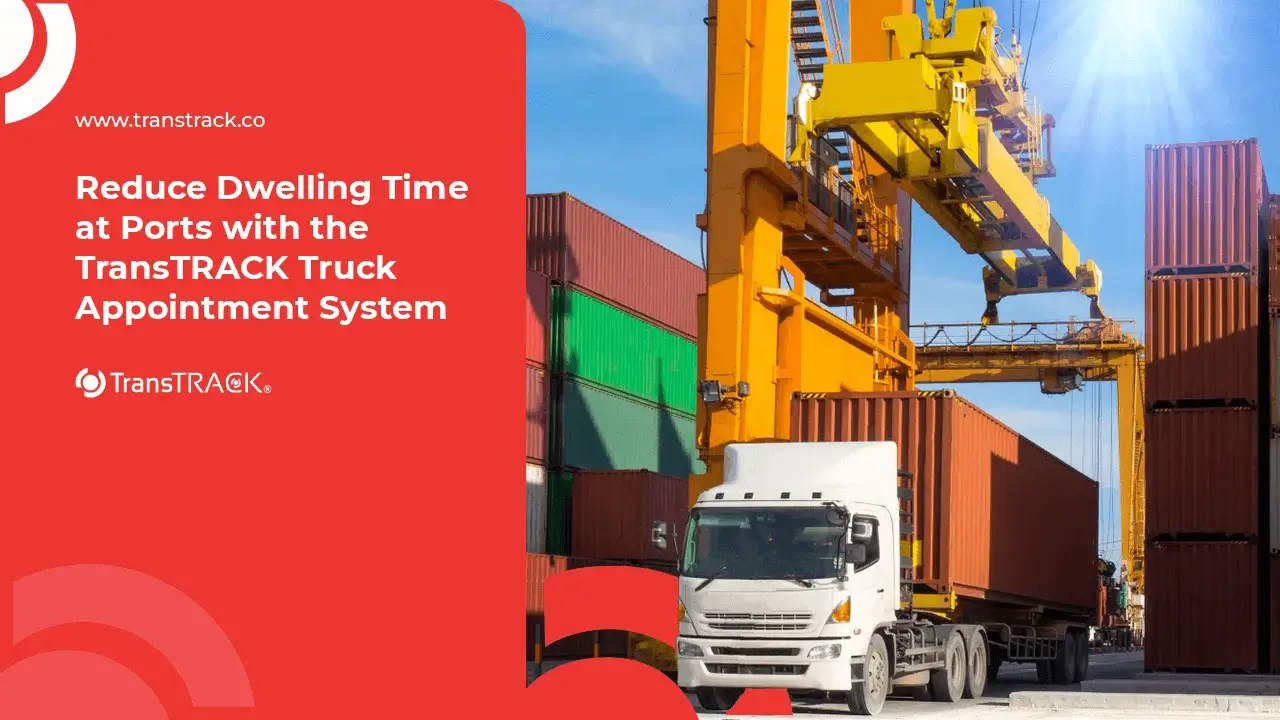
Dwelling time is one of the key indicators of port and logistics yard operational efficiency. Excessive cargo dwell time often causes truck queues, congestion in the yard, and additional costs such as demurrage. The Truck Appointment System (TAS) TransTRACK is a digital solution that enables structured truck arrival scheduling, minimizes queues, and improves overall operational productivity.
Understanding the Correlation Between Truck Queues and Dwelling Time
Long queues of trucks at the port gate directly extend dwelling time. When trucks cannot immediately enter or exit, cargo remains stuck in the yard. As a result, the time containers spend at the port increases even though the loading and unloading process at the dock has been completed.
High dwelling time is generally not caused by activities at sea, but rather by inefficiencies on land. A lack of synchronization between ship schedules, truck readiness, gate systems, and warehouse operations creates a bottleneck in land transportation. Without good coordination, the flow of cargo in and out is hampered and dwelling time is difficult to reduce.
Apa Itu Truck Appointment System (TAS)?
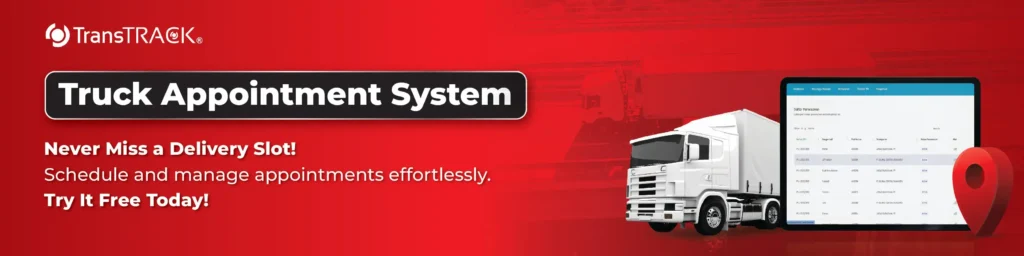
The Truck Appointment System (TAS) is a digital platform that allows trucking companies to reserve specific time slots for picking up or delivering containers at ports or warehouses.
TAS works by synchronizing cargo availability in the yard with fleet arrival schedules in real time, thereby minimizing truck queues and making the loading and unloading process more efficient.
The Benefits of TAS in Reducing Dwelling Time
The use of the Truck Appointment System (TAS) not only regulates truck arrivals, but also improves operational efficiency in the yard. With real-time visibility and structured scheduling, TAS helps reduce queues, speed up gate processes, and prepare cargo more optimally. Here are the main benefits of TAS that can reduce dwelling time:
- Eliminating Truck Congestion During Peak Hours (Peak Shaving)
TAS distributes truck arrivals evenly throughout the day, preventing the usual morning or afternoon queues. - Accelerating the Gate-In and Gate-Out Processes
Truck data entered into the system prior to arrival enables faster and paperless verification at the gate, reducing queues. - Cargo Preparation Optimization (Pre-Staging)
Terminal operators know the arrival schedule of trucks, so containers can be prepared in an easily accessible location, reducing search time and speeding up the loading and unloading process.
Steps for Implementing TAS for Maximum Efficiency
In order for the Truck Appointment System (TAS) to provide optimal benefits, its implementation needs to be strategic and integrated. The right approach not only simplifies truck flow, but also reduces dwelling time and increases yard productivity. Here is a step-by-step guide to its implementation:
Integration with TOS (Terminal Operating System)
Linking truck schedules with cargo inventory data in TOS enables real-time synchronization between truck arrivals and container availability. This prevents congestion in the yard and facilitates cargo preparation. With this integration, operational flows become more efficient and dwelling time can be reduced.
Implementation of Penalty and Incentive Systems
Giving priority to trucks that arrive on time according to their slots encourages fleet discipline. Conversely, imposing penalties for tardiness discourages haphazard queuing practices. This strategy maintains schedule discipline and reduces queuing surges at the gate.
Monitoring Real-time via Mobile App
Drivers can monitor the status of their slots in real time via a mobile app, making it easier to adjust their arrival times. This real-time information reduces uncertainty and waiting times at the gate. With active monitoring, truck traffic flows more smoothly and dwelling time is reduced.
Comparison: Without TAS vs. Using TAS
Before using the Truck Appointment System (TAS), yard and gate operations often faced long queues, manual verification, and suboptimal cargo preparation, all of which contributed to high dwelling times. With TAS, truck arrival flows, gate processes, and container preparation can be managed in a structured and real-time manner, thereby increasing efficiency. Here is a comparison between conditions without TAS and when TAS is implemented:
| Aspek | Without a bag | Using TAS |
| Truck Queue | Often pile up at the gate, especially during rush hour | Truck arrivals are evenly distributed throughout the day. |
| Proses Gate-In / Gate-Out | Slow, lots of manual verification and paperwork | Fast, paperless verification and scheduled |
| Cargo Preparation (Pre-Staging) | Containers are difficult to prepare and require time to search for. | Cargo ready at strategic locations according to truck schedule |
| Dwelling Time | High, cargo is held longer in the yard | Low, more efficient cargo flow |
| Truck Schedule Compliance | Difficult to control, delays often occur | High penalties and incentives encourage punctuality |
| Operational Visibility | Limited, coordination is difficult | In real time, drivers and operators can monitor slots. |
Integration of TAS with FMS TransTRACK
Combining the Truck Appointment System (TAS) with the TransTRACK Fleet Management System (FMS) provides more comprehensive visibility and control over the logistics flow. This synchronization ensures that cargo flow from the yard to fleet delivery can be monitored in real time, thereby increasing operational efficiency.
Appointment data recorded in TAS can be synchronized with the ETA (Estimated Time of Arrival) feature on TransTRACK. This allows operators and drivers to accurately monitor estimated arrivals and better adjust operational schedules.
With certainty regarding arrival schedules at the port, trucking companies can plan their next routes with precision. As a result, fleet utilization increases, waiting times decrease, and distribution flows become more efficient.
Conclusion
High dwelling time is often caused by truck queues at the gate and inefficient land transport coordination. With the implementation of the Truck Appointment System (TAS), truck arrivals can be scheduled in a structured manner, the gate process becomes faster, and cargo preparation can be optimized, thereby significantly reducing dwelling time. Integrating TAS with TransTRACK FMS adds end-to-end visibility and enables precise fleet route management.
Improve your port’s operational efficiency by using TransTRACK’s Truck Appointment System and experience a noticeable reduction in dwelling time.
FAQ: Dwelling Time & TAS
Can TAS really reduce logistics costs?
Yes, with reduced dwelling time, stacking costs (yard fees) and demurrage penalties can be minimized, making operations more efficient.
What are the biggest challenges in implementing TAS?
The main challenge is ensuring coordination and compliance from transportation operators (trucks) so that they arrive on time according to the predetermined slots.
How does TAS help reduce queues at port gates?
TAS distributes truck arrivals evenly throughout the day, preventing queues from building up during peak hours and speeding up the gate-in/gate-out process.
Can TAS be integrated with other port systems?
Yes, TAS can be synchronized with Terminal Operating Systems (TOS) and Fleet Management Systems (FMS) such as TransTRACK for end-to-end visibility and more precise fleet route management.
Recent Post



Topic :