Bahasa Indonesia


Optimizing Ship Operations with Vessel Monitoring
Posted on November 10, 2025 by Nur Wachda Mihmidati
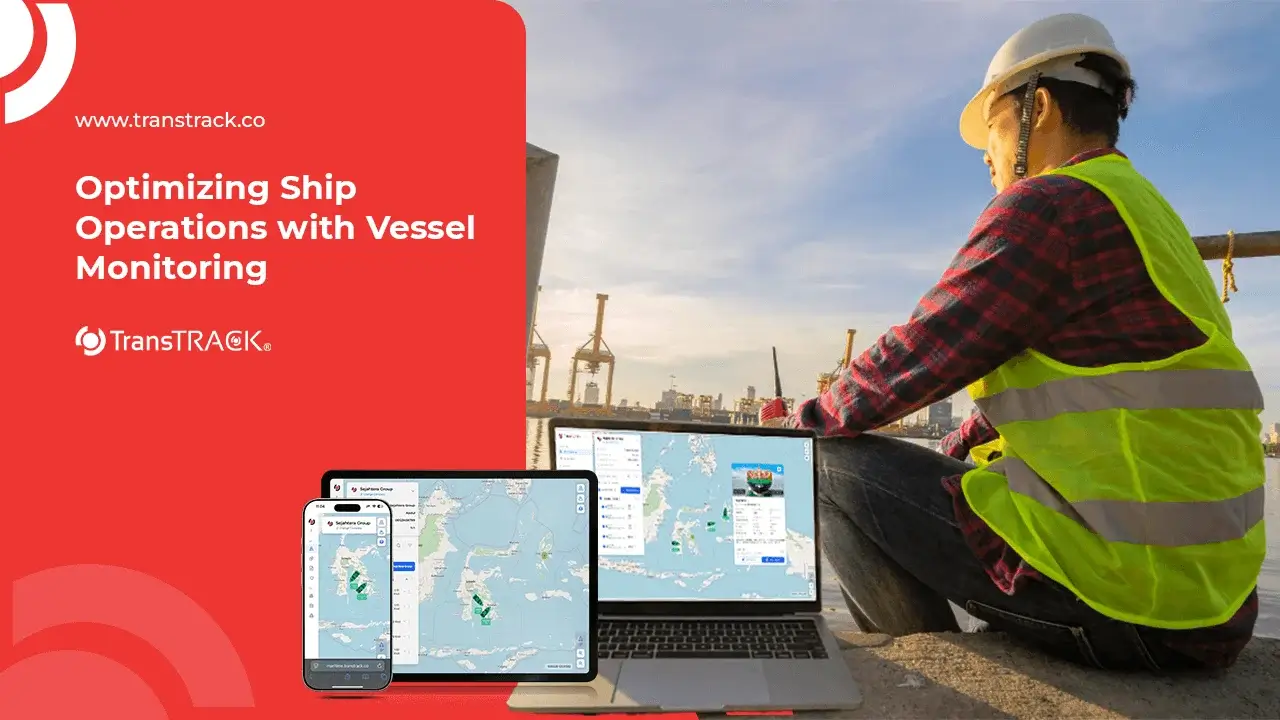
Discover how Vessel Monitoring can help shipping companies optimize vessel operations and reduce costs.
Marine vessel operations face significant challenges, from voyage management and cargo security to fuel efficiency. This is where vessel monitoring plays a crucial role for shipping companies, providing the right solution for accurate, real-time fleet control. With a clear monitoring process, companies can minimize the risk of loss, increase productivity, and maintain overall operational efficiency. Get to know more in this TransTRACK article!
What is Vessel Monitoring?
Vessel Monitoring is a ship monitoring system that tracks position, engine condition, and fuel consumption in real time. Vessel Monitoring systems can help shipping companies optimize routes, reduce costs, and minimize the risk of loss. By utilizing Vessel Monitoring, companies can make faster and more accurate decisions in fleet operations.
Operational Challenges of a Naval Fleet Without Vessel Monitoring
Without vessel monitoring, companies tend to face challenges in obtaining accurate data on fleet movements. This can lead to cost overruns, undetected engine failures, and even the risk of vessel misuse. Here are some of the main challenges faced by fleet operations without vessel monitoring:
Difficulty Tracking Ship Journeys
- The location of the ship is difficult to monitor directly.
- There is no clear visibility of the route being taken.
- The potential for ships to go off course is increasing.
Risk of cargo theft
- The cargo is vulnerable to disappearing without a trace.
- There was no adequate evidence at the time of the loss.
- Manual monitoring makes it difficult to trace the chronology.
Fuel costs are out of control.
- Fuel consumption is difficult to analyze.
- Fuel waste is not detected early.
- There is no fixed basic limit for consumption.
Delay in delivery of goods.
- Travel time is not measured accurately.
- Delays are difficult to predict.
- Distribution schedules are often disrupted.
Fraud from ship crew (route deviation, idle too long)
- Ships can stop for no apparent reason.
- Route deviation is difficult to detect.
- Losses due to operational manipulation increased.
The Main Function of Vessel Monitoring for Marine Logistics Companies
Vessel monitoring is useful for improving the efficiency and safety of maritime fleets. This technology provides real-time access to vessel status, allowing monitoring anytime and anywhere. Here are some of the main functions of vessel monitoring:
Real-Time Location Tracking
- Displays ship position in real time.
- Assist in monitoring travel routes.
- Minimize the risk of lane deviation.
Fuel Monitoring & Cost Control
- Monitor fuel usage over time.
- Detect potential cargo leaks and theft.
- Helps reduce fuel operating costs.
Engine Health & Maintenance Monitoring
- Displays detailed data on ship engine conditions.
- Minimize the risk of sudden damage in the middle of the sea.
- Maintenance scheduling is more accurate and efficient.
Route Optimization
- Selection of the most efficient route for ship travel.
- Optimize travel time and fuel consumption.
- Helps distribute loads faster and on time.
Voyage Report & Operational Audit
- Provides complete and detailed ship voyage reports.
- Assists in auditing and tracking of operational history.
- Become the basis for fleet performance evaluation.
Types of Ships That Require Vessel Monitoring
Many types of vessels require the use of vessel monitoring to ensure safe, efficient, and controlled voyages. This system can be applied to various maritime sectors, including logistics and industry. Here are some types of vessels that require vessel monitoring:
Logistics & cargo ships
- Assists in tracking containers and cargo.
- Minimize the risk of losing cargo.
- Ensure timely distribution.
Fishing boat
- Monitor fishing activities.
- Maintain the route so as not to exceed the limits of authority.
- Supports safety while at sea.
Passenger ship
- Ensuring passenger safety during the voyage.
- Monitoring the ship’s route and speed.
- Minimize the risk of late arrival.
Offshore vessels & oil and gas industry
- Helps make exploration operations safer.
- Maintain supply and logistics flow.
- Monitoring of ship activities is more transparent.
How to Choose a Vessel System Proper Monitoring
To select the optimal vessel monitoring technology, companies need to consider features, network coverage, and data integration. Ensure the vessel monitoring system has real-time monitoring capabilities for optimal fleet control. Choose a system from a vessel monitoring provider that offers strong technical support and data storage. Don’t forget to choose a trusted provider with a proven track record. Here are some things to consider:
- Make sure tracking, fuel monitoring, and alert features are available.
- Choose a satellite-compatible system for long-distance navigation.
- Evaluation of support services and completeness of travel reports.
Conclusion
Vessel monitoring allows companies to monitor vessels in real-time with high accuracy. Vessel monitoring systems improve operational efficiency, reduce the risk of fraud, and ensure safer voyages. By implementing vessel monitoring, maritime logistics companies can reduce costs and improve overall fleet performance.
Improve the efficiency and safety of your marine fleet with TransTRACK’s Vessel Monitoring System, a system that allows you to monitor fuel consumption, vessel position in real-time, and minimize the risk of theft and route deviation in just one dashboard.
FAQ
Why is vessel monitoring important for marine logistics companies?
Vessel monitoring is crucial for maritime logistics companies because it provides full visibility into vessel movements. It can also help minimize the risk of route deviations and losses, and facilitate faster and more accurate operational decision-making based on real-time data.
What are the features of vessel monitoring for business?
Features available in the Vessel Monitoring system include live tracking, fuel monitoring, and engine health. Voyage reports are also available for operational audits and route optimization for shipping efficiency.
How does vessel monitoring help save operational costs?
Vessel Monitoring helps save operational costs by reducing fuel waste, quickly detecting any deviations in asset usage, and assisting in planning the most energy-efficient routes.
Can vessel monitoring detect ship fuel theft?
Yes, with an integrated fuel monitoring system, the system can monitor fuel consumption in detail and provide notifications if abnormalities occur.
What is the difference between regular and satellite-based vessel monitoring?
Vessel Monitoring usually works in areas with limited networks, while satellite-based vessel monitoring is able to work even in the middle of the ocean and has a wider and more stable reach for global shipping.
Recent Post




Topic :