Bahasa Indonesia


Improving Fleet Safety through Traffic Accident Prevention with ADAS
Posted on February 12, 2026 by Nur Wachda Mihmidati
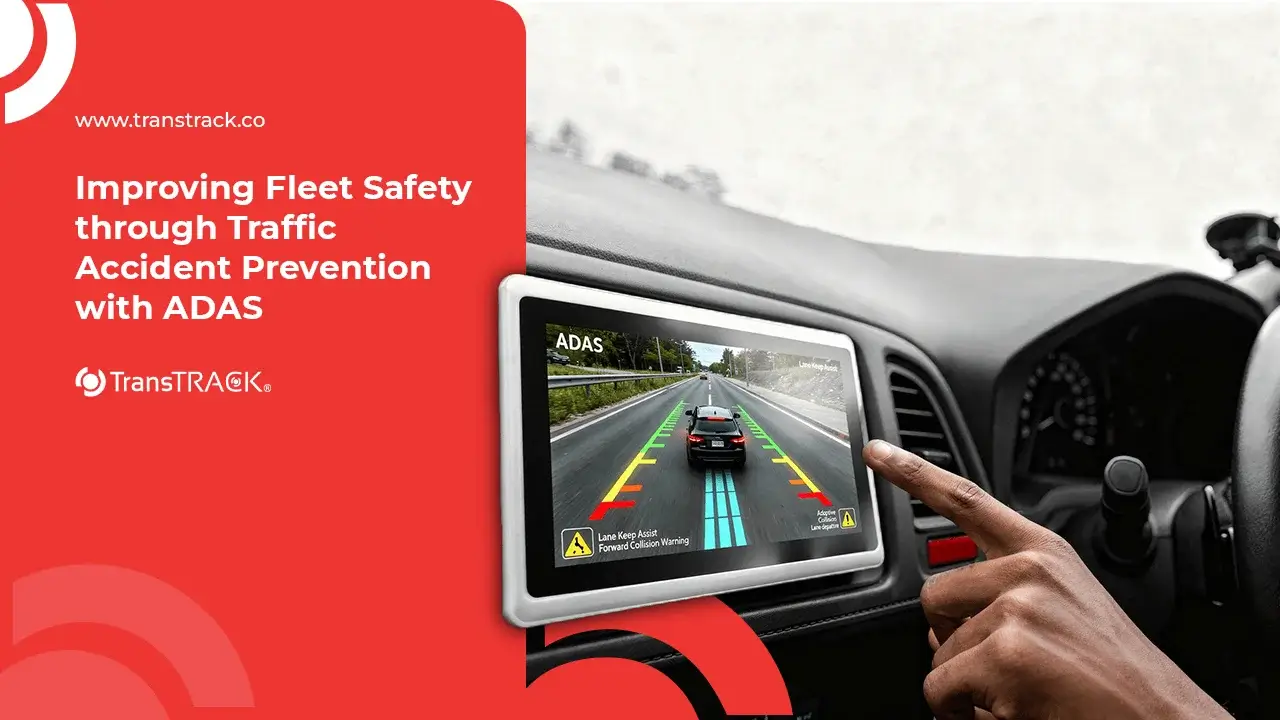
Fleet safety is one of the most crucial aspects of transportation operations. Traffic accidents not only endanger drivers, but also result in financial losses, vehicle damage, and operational schedule disruptions that can harm the company. Human error, road conditions, and driver visibility limitations are often the main factors contributing to incidents.
To minimize these risks, companies can now rely on smart technologies such as ADAS and vehicle monitoring systems. With the ability to detect potential hazards in real time, provide early warnings, and monitor driver behavior, this technology helps fleets operate more safely and efficiently, while supporting long-term accident prevention strategies. Read the full explanation in the following TransTRACK article!
The Urgency of Accident Prevention in Fleet Operations
Fleet safety is the cornerstone of operational sustainability. With high mobility and productivity pressures, companies need a data-driven, technology-enabled preventive approach to minimize accident risks.
Data Analysis
The majority of commercial vehicle accidents are caused by human error such as fatigue, distraction, and speeding. With data-based monitoring, potential risks can be identified more quickly before they become incidents.
Financial Impact
Accidents cause fleet downtime, increased insurance costs, and loss of customer trust. Prevention is always cheaper than dealing with the aftermath.
Visi Zero Accident
The zero accident target requires technological support such as real-time monitoring, driver behavior analysis, and early warning systems as part of safety SOPs.
What is ADAS Technology in Commercial Vehicles?
ADAS is a safety-enhancing technology that helps drivers make faster and more accurate decisions in various road conditions.
Brief Definition
Advanced Driver Assistance Systems (ADAS) are smart assistance systems designed to improve safety and reduce the risk of accidents while driving.
Primary Function
This system detects objects or potential hazards around the vehicle in real time, then provides early warnings or takes corrective action when necessary.
Main Components
ADAS technology is generally supported by AI cameras, radar sensors, lidar, and electronic control modules that work in an integrated manner.
Key ADAS Features to Prevent Traffic Accidents
Okay, here is a more complete version with bridging sentences after the title to connect readers to each point.
Key ADAS Features to Prevent Traffic Accidents
In commercial vehicle operations, the risk of accidents always exists due to human error, road conditions, or driver visibility limitations. ADAS technology acts as an “extra pair of eyes” and a smart assistant that helps drivers make faster and safer decisions. The following are the main features that support accident prevention:
Forward Collision Warning (FCW)
This system monitors the distance between your vehicle and the vehicle in front in real time. If a potential collision is detected, FCW will provide visual and audio warnings so that the driver can brake in time and avoid a chain collision.
Lane Departure Warning (LDW)
LDW works by monitoring the vehicle’s position in the lane. When the vehicle unintentionally drifts out of the lane—for example, due to driver drowsiness or distraction—the system provides an early warning, helping to maintain concentration and prevent accidents.
Autonomous Emergency Braking (AEB)
In critical situations where a collision cannot be avoided by the driver’s reaction alone, AEB automatically activates the brakes. This feature is very effective in reducing the impact of a collision or even preventing accidents.
Blind Spot Monitoring
Blind spot monitoring helps drivers of trucks or large buses see areas that are difficult to reach with their eyes. This system warns of the presence of other vehicles in blind spots, making lane changes or maneuvers safer and significantly reducing the risk of collisions.
How to Implement ADAS to Reduce Fleet Accident Risk
Adopting ADAS in a fleet is not just a matter of installing the technology, but also ensuring that drivers understand the system and that companies utilize the data for maximum safety. Here are the steps:
- Installation of AI Dashcam Devices: Easy to install in older fleets, monitors the environment, and provides real-time alerts.
- Driver Training: Teaching drivers to respond appropriately to ADAS warnings without complete dependence.
- Data-Based Monitoring: Utilizing ADAS data to evaluate driver behavior, scoring, and improving safety standards.
ROI and Long-Term Benefits for Companies
ADAS investments not only improve safety, but also provide significant financial and operational benefits for fleets. Some of the key benefits include:
- Lower Insurance Premiums: Reduced accident risk, fewer claims, and lower premiums.
- Fuel Efficiency: Smoother driving thanks to ADAS, saving fuel and operating costs.
- Longer Asset Life: Reduces minor damage, extends vehicle service life.
- Higher Productivity: Drivers can avoid incidents that cause fleet downtime.
- Improved Company Reputation: A safe and efficient fleet increases customer and stakeholder confidence.
Conclusion
Fleet safety cannot rely solely on drivers. Human error, road conditions, and external factors always pose risks. Technologies such as ADAS and fleet monitoring systems are key to reducing accident rates, lowering operational costs, and extending asset life.
With the Vehicle Surveillance System from TransTRACK, companies can monitor vehicles in real time, identify risky driver behavior, and take preventive action before incidents occur. Improve the safety of your fleet and achieve maximum operational efficiency with this smart solution.
FAQ: Traffic Accident Prevention
How does ADAS work to prevent traffic accidents?
ADAS scans the surrounding environment using sensors and cameras, then processes the data with AI algorithms to provide audible or visual warnings before a potential collision occurs.
Is ADAS technology effective for large trucks?
Highly effective. Large trucks have long braking distances and large blind spots; ADAS helps to significantly close these safety gaps.
What is the difference between Passive ADAS and Active ADAS?
– Passive ADAS: Provides warnings (sound or vibration) only.
– Active ADAS: Can take automatic actions such as braking or steering.
How much did the accident rate decrease after using ADAS?
Industry studies show that early warning systems can reduce the risk of frontal collisions by up to 40%.

Recent Post





Topic :