Bahasa Indonesia


Understanding the Maritime Fleet Management System and Its Benefits for the Maritime Industry
Posted on April 15, 2026 by Nur Wachda Mihmidati
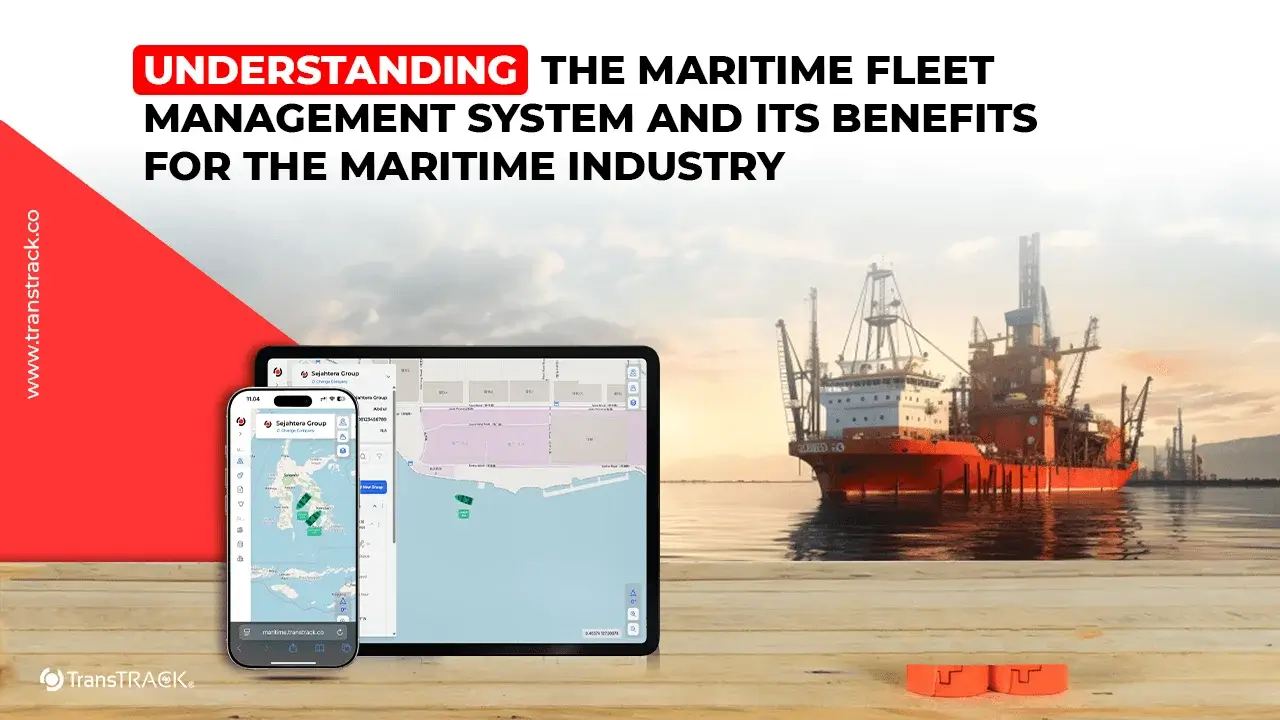
The Maritime Fleet Management System is a digital solution used to manage and monitor vessel fleet operations in an integrated and real-time manner. This system helps improve fuel efficiency, crew safety, compliance with maritime regulations, and provides full visibility into vessel performance at sea. Read the full explanation in the following article on TransTRACK!
What is Maritime Fleet Management System?
The Maritime Fleet Management System (MFMS) is a digital system used to manage, monitor, and optimize fleet operations in an integrated and real-time manner.
Simply put, MFMS helps shipping companies, maritime logistics firms, and port operators ensure that every vessel operates more efficiently, safely, and under control.
Pillars of Maritime Fleet Management System
To ensure optimal maritime fleet operations, the Maritime Fleet Management System is built on several key, interconnected pillars. Each pillar plays a vital role in enhancing the efficiency, safety, and sustainability of vessel operations.
1. Vessel Performance Monitoring
As a cornerstone of fleet management, vessel performance monitoring enables companies to gain full visibility into operational conditions in real time.
- Real-time monitoring of the ship’s engine condition to ensure optimal performance
- Analysis of hull fouling to reduce hydrodynamic drag and improve efficiency
- Predictive maintenance to prevent unexpected breakdowns and downtime
2. Fuel & Emissions Management
As demands for efficiency and environmental regulations increase, fuel and emissions management have become a crucial aspect of modern maritime operations.
- Automatic fuel consumption tracking via the vessel telemetry system
- Emissions reporting in accordance with international standards such as the International Maritime Organization 2023, CII (Carbon Intensity Indicator), and EEXI
- Implementation of green routing to determine the most efficient route with the lowest carbon footprint
3. Crew & Safety Management
Behind the efficient operation of a ship lies the crucial role of the crew, who must be effectively managed in terms of both competence and workplace safety.
- Structured management of crew certification and rotation schedules
- Monitoring workplace safety through a digital incident reporting system
- Improved compliance with global maritime safety standards
4. Marine Procurement & Inventory
The smooth operation of a ship also depends heavily on the availability of spare parts and efficiently managed logistics.
- Centralized management of spare parts procurement and operational needs for ships
- Monitoring inventory levels to avoid shortages or overstock
- Integration with logistics systems to ensure timely availability of goods
Implementation Challenges & Solutions
Although it offers many benefits, the implementation of a Maritime Fleet Management System also presents a number of challenges that must be addressed with the right strategy.
1. Connectivity in the Open Sea
One of the main obstacles to maritime digitalization is the limited availability of communication networks in open-sea areas.
- Challenge: Limited network connectivity when the ship is on the open sea
- Solution: Utilization of satellite technology and store-and-forward systems for data synchronization
2. System Interoperability
Digital transformation often faces the challenge of integrating with existing systems.
- Challenge: Integration of legacy systems with new digital platforms
- Solution: Use of open APIs and integrated platforms to ensure seamless data exchange
3. Crew Training
The adoption of technology will not be optimal without the readiness of the human resources who operate it.
- Challenge: Crew adaptation to new technology
- Solution: Ongoing training programs and a user-friendly system interface
How Much Can You Save?
The implementation of a Maritime Fleet Management System not only improves operational visibility but also delivers significant financial benefits. Through data-driven monitoring and process automation, companies can identify efficiency opportunities that were previously hard to spot.
- An average reduction in fuel consumption of 5–10% through optimization of routes, speed, and vessel performance
- A reduction in emergency maintenance costs thanks to the implementation of predictive maintenance, which prevents sudden breakdowns
- An increase in a vessel’s resale or charter value due to a well-documented and transparent maintenance history
Overall, these efficiencies directly contribute to lower operating costs while enhancing the company’s competitiveness in the maritime industry.
Conclusion
The Maritime Fleet Management System serves as a critical foundation for the digital transformation of the maritime industry. By integrating vessel monitoring, fuel efficiency, crew management, and logistics management, this system enables companies to operate their fleets more efficiently, safely, and sustainably. It not only reduces operational costs but also enhances transparency, regulatory compliance, and business competitiveness amid increasingly complex industry demands.
Optimize Your Fleet with the Right Solution
For those of you who want to start making the most of a Maritime Fleet Management System, TransTRACK’s Vessel Monitoring System offers an integrated solution specifically designed for modern maritime operational needs.
With real-time technology, TransTRACK helps you:
- Monitoring the movement and performance of ships in detail
- Optimizing fuel consumption and shipping routes
- Improving safety and operational compliance
- Making faster decisions based on accurate data
It’s time to switch to smarter, integrated fleet management. Discover how TransTRACK can improve your maritime operational efficiency today
FAQ
What is the difference between land-based and maritime fleet management?
The differences lie in connectivity and operational complexity. Maritime FMS rely on satellites (VSATs), must comply with International Maritime Organization and MARPOL regulations, and must contend with extreme sea and weather conditions that do not exist on land.
How does this system reduce the ship’s fuel consumption?
With weather-based route optimization, real-time engine performance monitoring, and real-time detection of propulsion inefficiencies, fuel consumption is more efficient.
What are the main benefits of a Maritime Fleet Management System?
Up to 15% fuel efficiency, automatic emissions compliance, improved crew safety, and operational data transparency.
How does the system handle connectivity in the middle of the ocean?
Using edge computing and automatic synchronization via satellite, such as VSAT or Starlink, when a connection is available.
Can this system be integrated with the port system?
Yes, MFMS can connect to port systems to synchronize berthing schedules, loading and unloading operations, and vessel movements more efficiently.
Is the ship data secure in this system?
Yes, the system uses encryption and multi-layered access controls to ensure the security of operational data and ship communications.
Recent Post




Topic :