Bahasa Indonesia


Understanding Advanced Driver Assistance Systems (ADAS) and Their Role in Road Safety
Posted on April 6, 2026 by Nur Wachda Mihmidati
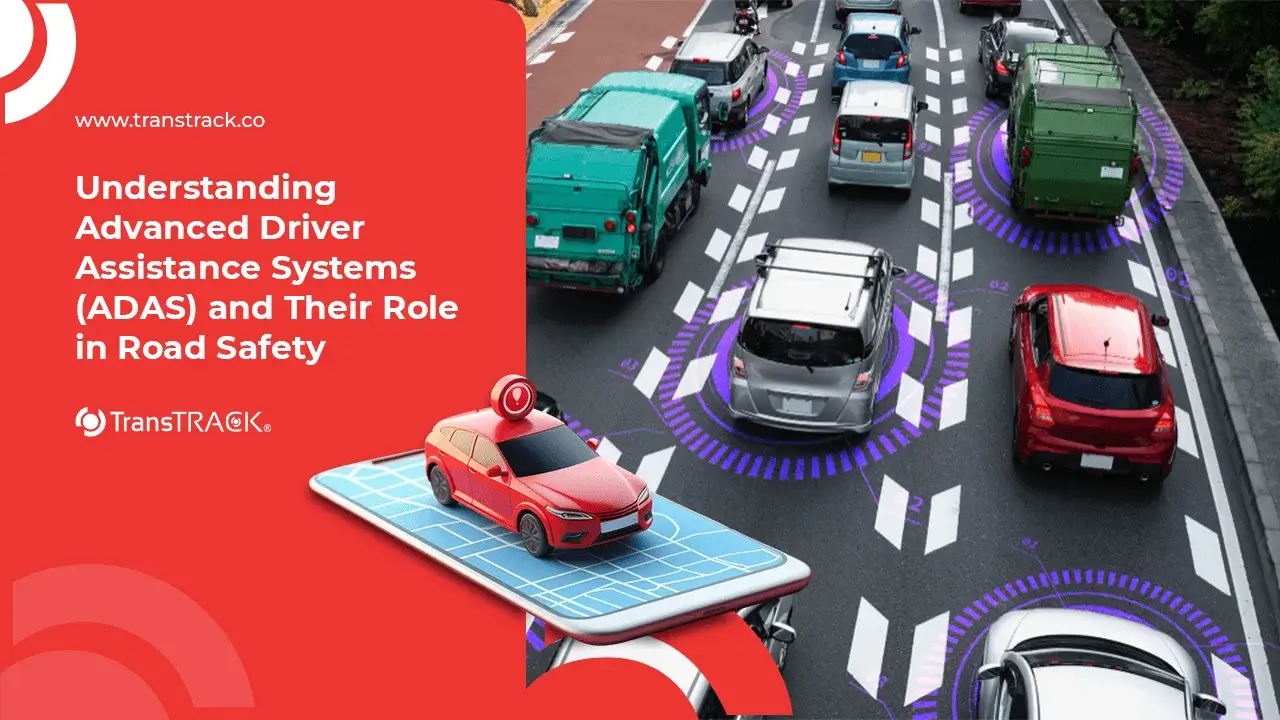
Advanced Driver Assistance Systems (ADAS) are modern vehicle safety technologies that help drivers detect potential hazards, maintain control of the vehicle, and enhance driving comfort and safety through various automated features and smart alerts. Read the full explanation in the following TransTRACK article!
What is ADAS?
ADAS (Advanced Driver Assistance Systems) is a suite of vehicle technologies designed to help drivers improve safety, comfort, and control while driving.
This system works by combining sensors, cameras, radar, and artificial intelligence to detect conditions around the vehicle and provide warnings or even take automatic action.
What Is the Main Purpose of Using an Advanced Driver Assistance System (ADAS)?
To understand the important role of ADAS in modern vehicles, here are some of its main objectives:
- Improving driving safety by detecting potential hazards sooner
- Reducing the risk of accidents through early warnings and automatic actions
- Helps drivers while driving, such as maintaining distance, staying in lane, and controlling speed
- Reduces driver fatigue, especially on long trips or in heavy traffic
- Improving vehicle operational efficiency, including cost savings resulting from incidents
- Promoting more disciplined and consistent driving behavior
Key Components and Technology Architecture of the Advanced Driver Assistance System (ADAS)
The following is the structure of the main components and the technology architecture of ADAS (Advanced Driver Assistance System):
1. Environmental Sensing (Environmental Perception)
Components that detect the vehicle’s surroundings:
- Camera System (Mono / Stereo / 360°)
- Radar (Short Range & Long Range Radar)
- LiDAR (Light Detection and Ranging)
- Ultrasonic Sensors (Park Assist)
- Infrared / Night Vision Sensors
- GPS & GNSS Receiver
- Inertial Measurement Unit (IMU) (accelerometer + gyroscope)
2. Prosesor & ECU (Processing & Control Unit)
Components that process data and make decisions:
- ADAS Domain Controller
- Electronic Control Unit (ECU)
- Central Processing Unit (CPU) / High-Performance SoC
- GPU (Graphics Processing Unit) untuk Computer Vision
- AI Accelerator / NPU (Neural Processing Unit)
- Sensor Fusion Module
- Vehicle Control Module (VCM)
- Real-Time Operating System (RTOS)
3. Actuators (Execution System)
Components that execute commands from the ADAS system:
- Brake Actuation System (Automatic Emergency Braking)
- Electronic Power Steering (EPS) Control
- Throttle Control System (Accelerator by wire)
- Transmission Control Unit (TCU)
- Steering Actuator (Lane Keeping Assist)
- Adaptive Cruise Control Module
- Parking Brake System (EPB – Electronic Parking Brake)
Popular ADAS Features and Their Functions
As modern vehicle technology continues to advance, ADAS offers a variety of features designed to enhance safety, comfort, and ease of driving in various situations. Here are some of the most commonly used ADAS features, categorized by type:
List of Braking and Safety Features
- Automatic Emergency Braking (AEB) → automatically applies the brakes when there is a risk of a collision
- Forward Collision Warning (FCW) → alerts the driver to a potential frontal collision
- Pedestrian Detection System → detects pedestrians in the vehicle lane
- Adaptive Brake Assist → increases braking force in emergency situations
- Traffic Sign Recognition (TSR) → reads traffic signs to assist with driving decisions
List of Route Monitoring Features
- Lane Departure Warning (LDW) → alerts the driver when the vehicle unintentionally drifts out of its lane
- Lane Keeping Assist (LKA) → helps correct the steering to keep the vehicle in its lane
- Lane Centering Assist → automatically keeps the vehicle centered in the lane
- Road Edge Detection → detects road edges to prevent lane departure
List of Driver Comfort Features
- Adaptive Cruise Control (ACC) → automatically maintains speed and distance from the vehicle ahead
- Traffic Jam Assist → helps with driving in traffic jams
- Driver Monitoring System (DMS) → monitors the driver’s level of focus and fatigue
- Speed Limit Assist → adjusts to or alerts you to the speed limit
- Stop & Go Function → automatically stops and starts the vehicle in heavy traffic
List of Parking and Blind Spot Features
- Blind Spot Detection (BSD) → detects vehicles in the blind spot
- Rear Cross Traffic Alert (RCTA) → alerts the driver when backing out of a parking space
- Parking Assist System → assists with automatic parking maneuvers
- 360° Surround View Camera → a comprehensive view of the area around the vehicle
- Parking Sensors (Ultrasonic) → detects the distance to objects while parking
Advantages and Limitations of ADAS
ADAS technology offers many benefits in enhancing driving safety and comfort, but it also has certain limitations that need to be understood to ensure its optimal use.
Advantages of ADAS
- A decrease in insurance premiums → lower accident risk can result in lower insurance costs
- Family safety is better assured → the system helps prevent accidents and minimize risks on the road
- Long-distance driving comfort is significantly improved → features such as adaptive cruise control and lane assist reduce driver fatigue
Limitations of ADAS
- Driver over-reliance → drivers may become less alert because they rely too heavily on the system
- High sensor repair costs → ADAS sensors are quite sensitive and expensive to repair after a minor collision
- Performance is limited under certain conditions → such as heavy rain, fog, or roads with unclear lane markings
- Does not fully replace the driver → still requires human control and vigilance at all times
Conclusion
Advanced Driver Assistance Systems (ADAS) are vehicle safety technologies that utilize sensors, cameras, radar, and artificial intelligence to assist drivers in detecting potential hazards, maintaining lane position, regulating distance, and performing automatic braking. With features such as collision warning, lane keeping, and adaptive cruise control, ADAS plays a significant role in enhancing safety, comfort, and driving efficiency, although it still requires the driver’s full attention.
In a more integrated development, this ADAS technology is also a key component of broader vehicle monitoring systems such as TransTRACK’s Vehicle Surveillance System, which encompasses not only ADAS but also Driver Monitoring System (DMS), driver behavior monitoring, and real-time vehicle monitoring to provide more comprehensive operational visibility, enhance fleet safety, and support data-driven decision-making.
Improve your fleet’s safety standards and operational control with the Vehicle Surveillance System from TransTRACK, an integrated solution that combines ADAS, DMS, and real-time monitoring to provide full visibility and smarter, safer fleet management.
FAQ
What is the difference between passive ADAS and active ADAS?
Passive ADAS systems only alert the driver—through audio, visual, or vibration cues—when a potential hazard is detected, whereas Active ADAS systems not only issue warnings but can also take automatic actions such as braking, steering correction, or speed adjustment to help prevent accidents.
Can cars equipped with ADAS drive themselves completely?
No, ADAS hasn’t yet made cars fully self-driving because the system only serves as an assistant. Drivers must still keep an eye on the road and be ready to take control at any time.
Does ADAS work in the rain or at night?
Yes, but performance may vary depending on conditions. Heavy rain, fog, or low light can affect the sensor’s ability to detect objects accurately.
Do all cars come equipped with ADAS?
Not all cars are equipped with ADAS. This technology is generally available on certain models, although an increasing number of manufacturers are beginning to make it a standard feature.
Does ADAS require special maintenance?
Yes, especially for sensors like cameras and radar, which need to be calibrated to remain accurate, particularly after vehicle repairs or collisions.
Can ADAS be turned off?
Some ADAS features can be enabled or disabled as needed, but key safety features typically remain active for safety reasons.
Is ADAS the same as an autonomous vehicle?
No. ADAS is merely a driver-assistance system, whereas autonomous vehicles can drive themselves with a much higher level of automation.





Topic :