Bahasa Indonesia


The Role of the Logistics Fleet Management System in the Transformation of the Logistics Industry
Posted on April 10, 2026 by Nur Wachda Mihmidati
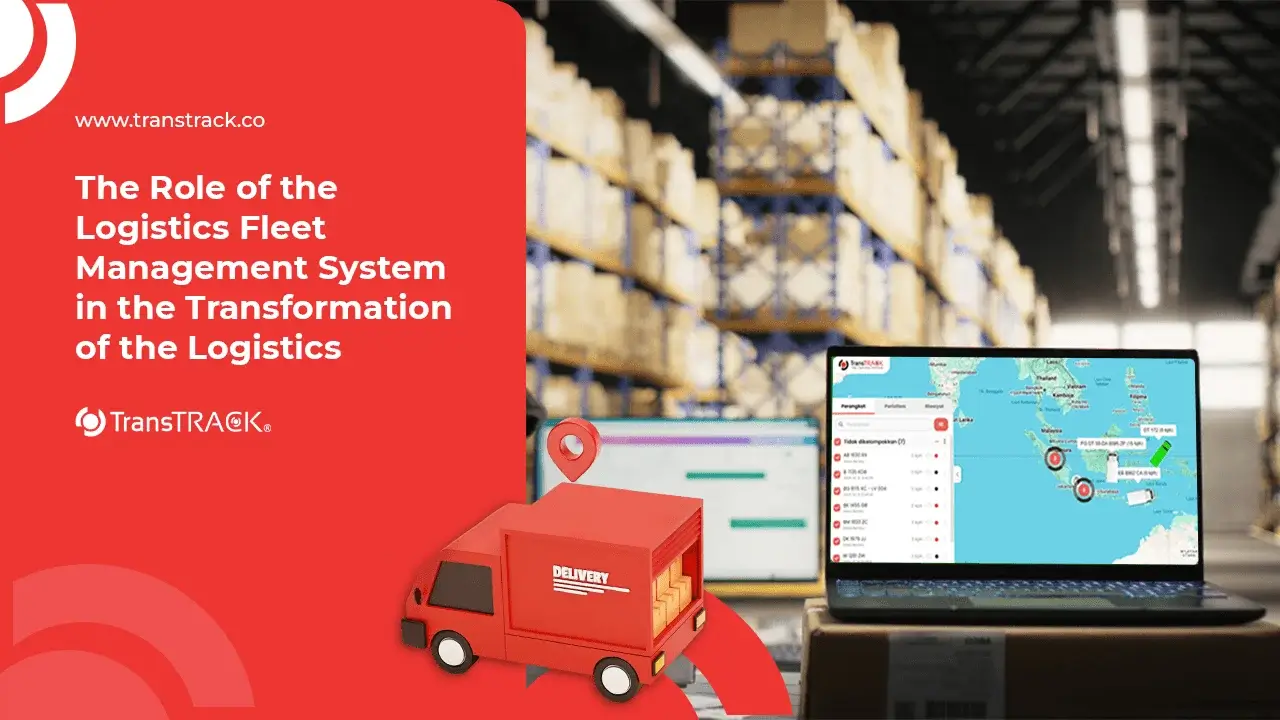
In the modern logistics industry, efficiency, punctuality, and fleet visibility are key factors in maintaining business competitiveness. To address these challenges, many companies are beginning to adopt a Logistics Fleet Management System (FMS) as a digital solution that enables real-time, integrated fleet management. Here are some frequently asked questions about this system and its role in improving logistics operational performance. Read the full explanation in the following article TransTRACK!
Apa itu Logistic Fleet Management System?
The Logistics Fleet Management System (FMS) is a technology-based system used to manage, monitor, and optimize logistics fleet operations, from vehicles and drivers to goods distribution—in an integrated and real-time manner.
A Simple Explanation
FMS helps logistics companies understand:
- Where is the vehicle currently located?
- What is the condition of the vehicle?
- Who is the driver, and how does he behave?
- Shipping status
All of this information is displayed on a single digital platform, making operations more efficient and better controlled.
The main benefits of a fleet management system in the logistics industry
Amid increasingly fast-paced and complex distribution demands, logistics companies need a system capable of boosting efficiency while maintaining operational reliability. A Fleet Management System offers a solution to comprehensively optimize fleet performance through data visibility and real-time control.
- Fuel cost reduction (up to 12%) Through fuel consumption monitoring, route optimization, and driver behavior analysis, companies can reduce waste and improve fuel efficiency.
- Improved delivery timeliness (ETA) The system enables optimal route planning and real-time monitoring, resulting in more accurate estimated times of arrival (ETA) and more timely deliveries.
- Real-time vehicle health monitoring Vehicle condition can be monitored in real time via sensors and telematics systems, enabling early detection of malfunctions and more scheduled maintenance.
Key Features That Drive Logistics Efficiency
To improve operational efficiency and visibility within the distribution chain, the Fleet Management System is equipped with a range of core features that are fully integrated and operate in real time.
Real-Time Tracking & End-to-End Visibility
This feature allows companies to monitor vehicle locations and delivery statuses in real time from start to finish, making the entire distribution chain more transparent and manageable.
Algorithm-Based Route Optimization
The system automatically calculates the most efficient route by taking into account traffic conditions, distance, and travel time to minimize delays and reduce operational costs.
Driver Behavior Management
Analyzing driving habits such as speed, braking, and acceleration to improve safety, fuel efficiency, and compliance with operational standards.
Predictive Maintenance (Vehicle Maintenance Planning)
Using real-time vehicle data to predict maintenance needs, thereby preventing sudden breakdowns and extending the operational life of the fleet.
Measuring the Success of Fleet Management in the Logistics Industry
The success of the Fleet Management System (FMS) is most clearly evident when comparing operational conditions before and after the system’s implementation. These changes are typically reflected in cost efficiency, operational accuracy, and overall logistics service quality.
Before vs. After Comparison of FMS Use
| Indicator | Before FMS | After FMS |
| Fuel costs | Uncontrolled, waste often occurs | More transparent and efficient, with potential savings of up to ±12% |
| Estimated Time of Arrival (ETA) | Often late due to suboptimal routes | More accurate with real-time route optimization |
| Fleet visibility | Limited; it is difficult to determine the vehicle’s location | Real-time tracking with end-to-end visibility |
| Vehicle maintenance | Reactive (once damaged) | Preventive and predictive based on vehicle condition data |
| Driver behavior | Not systematically monitored | Monitored (speed, braking, driving efficiency) |
| Logistics operating costs | High and unstable | More controlled and data-driven |
With FMS, companies not only achieve cost efficiencies but also enhance overall operational control—from vehicles and drivers to delivery performance.
Conclusion
A Logistics Fleet Management System is a critical solution in the transformation of modern logistics operations. With capabilities ranging from real-time monitoring and route optimization to fleet performance analytics, FMS helps companies improve efficiency, reduce operational costs, and enhance the accuracy and quality of delivery services. Comparisons before and after implementation also demonstrate a significant impact on productivity and overall operational control.
However, the full benefits of FMS can only be realized through a system that is integrated, accurate, and easily adaptable to the evolving needs of the logistics industry.
Optimize Your Logistics Operations with TransTRACK
Improve the efficiency, visibility, and control of your fleet with the Fleet Management System from TransTRACK.
With TransTRACK’s integrated solutions, you can:
- Monitoring the fleet in real time
- Optimizing delivery routes
- Significantly reduce operating costs
- Improving driver and vehicle performance
It’s time to switch to smarter, data-driven fleet management.
Use the TransTRACK Fleet Management System and take your logistics operations to the next level.
FAQ
Why is a fleet management system important for logistics businesses?
Because this system helps minimize operational risks, reduce variable costs such as fuel and repairs, and ensure compliance with government regulations through more structured and real-time monitoring.
What is the ROI (Return on Investment) of using a fleet management system?
On average, businesses can expect a return on investment within 6–12 months, primarily from fuel savings of 10–15% as well as reduced driver overtime costs and other operational inefficiencies.
What is the biggest benefit of a fleet management system?
The greatest benefit is a reduction in operating costs of up to 25%, achieved through fuel savings, optimization of driver working hours, and more systematic and efficient vehicle maintenance.
Is this system suitable for small logistics businesses?
Yes, cloud-based systems (SaaS) offer flexibility and scalability, allowing small businesses to start with a specific number of vehicles and adjust costs according to their operational needs.
How does a Fleet Management System help improve operational safety?
By monitoring driver behavior and vehicle conditions in real time, the system can detect potential risks earlier, thereby reducing the likelihood of accidents and damage in the field.
Can the Fleet Management System be integrated with other systems?
Yes, most modern FMS systems can be integrated with ERP systems, TMS (Transportation Management Systems), and supply chain platforms to create a more connected and efficient logistics ecosystem.



Topic :