Bahasa Indonesia


Fleet Management System, A Smart Solution for Operational Efficiency
Posted on April 21, 2026 by Nur Wachda Mihmidati
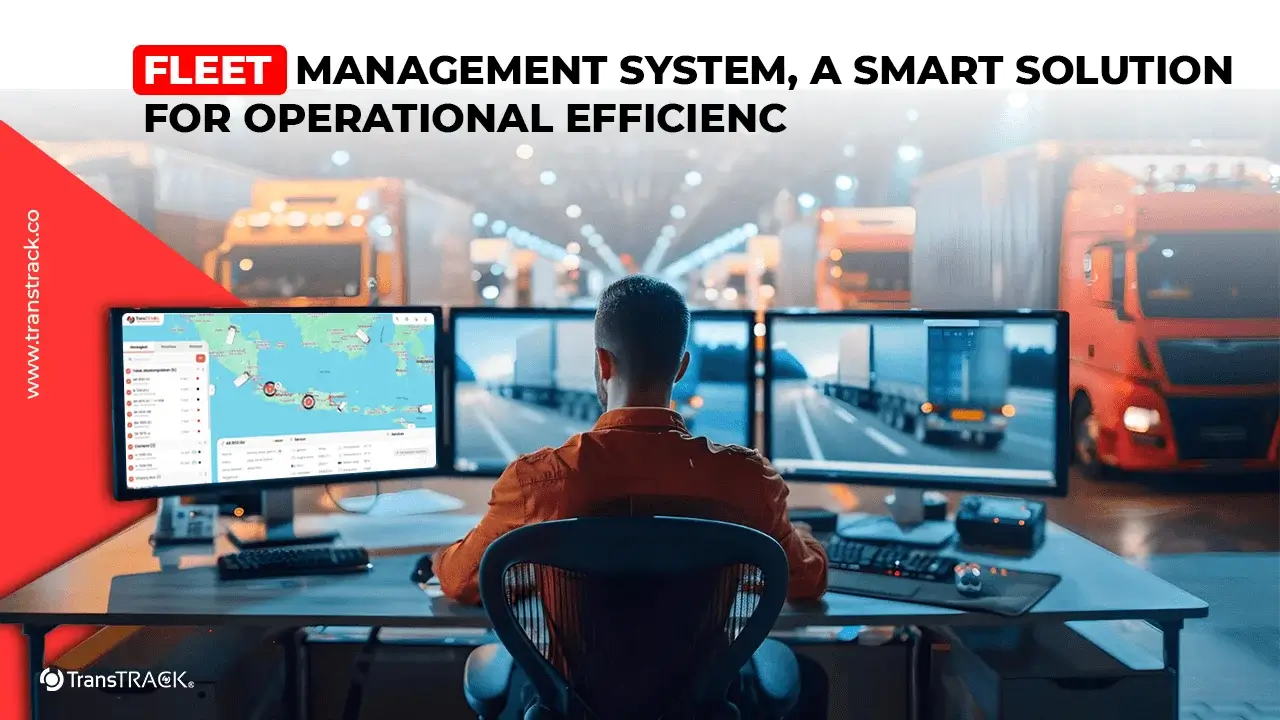
A Fleet Management System is a technology-based system used to manage, monitor, and optimize all vehicle fleet operations in real time. This system includes various key functions such as GPS tracking, fuel management, driver behavior monitoring, maintenance scheduling, and route optimization. By implementing a Fleet Management System, companies can improve operational efficiency, reduce costs, enhance safety, and gain more transparent and accurate data visibility across various industries. Read the full explanation in the following TransTRACK article!
What is a fleet management system?
A Fleet Management System is a technology-based system used to monitor, manage, and optimize vehicle fleet operations in real time. The system includes location tracking, route management, fuel consumption monitoring, vehicle maintenance, and data analytics to improve efficiency and safety and reduce a company’s operating costs.
What is the purpose of using a fleet management system?
More specifically, the Fleet Management System serves as an integrated solution that focuses not only on vehicle tracking but also on optimizing all fleet operational processes; thus, its primary objectives can be summarized as follows:
- Improving fleet operational efficiency through route optimization and real-time monitoring
- Ensuring driver and vehicle safety through driving behavior monitoring
- Reduce operating costs by 20–30% through fuel savings, reduced maintenance costs, and minimized downtime
How Does a Fleet Management System Work?
To gain a more comprehensive understanding of how a Fleet Management System works, the process can be broken down into several interconnected key stages, starting with:
- Data Collection Data is collected from GPS devices, vehicle sensors, and onboard systems that record location, speed, fuel consumption, and driver behavior.
- Data Transmission The collected data is transmitted in real time via a cellular or IoT network to a central server.
- Cloud Analytics In the cloud, data is processed and analyzed to generate insights such as route efficiency, vehicle condition, and fleet performance.
- User Visualization The analysis results are displayed via an easy-to-use dashboard, allowing users to monitor and make decisions quickly and accurately.
Essential Features of a Modern FMS
To ensure that fleet management operates optimally, efficiently, and in a data-driven manner, modern Fleet Management Systems typically come equipped with a variety of key, integrated features. These key features include:
Real-Time GPS Tracking
Enables real-time fleet location tracking to improve operational visibility and control.
Fuel Management
Helps monitor and optimize fuel usage to make it more efficient and cost-effective.
Driver Behavior Monitoring
Analyzing driver behavior—such as speed, braking, and idle time—to improve driving safety.
Maintenance Scheduling
Automatically schedule vehicle maintenance to prevent breakdowns and downtime.
Route Optimization
Optimizing travel routes to make them faster, more fuel-efficient, and more operationally efficient.
Strategic Benefits for Various Industries
Across various industrial sectors, Fleet Management Systems have a significant strategic impact on improving operational efficiency, safety, and asset control. The benefits can be seen in the following industries:
Logistics & Distribution
Improving delivery accuracy, route efficiency, and real-time fleet visibility to support a more optimized supply chain.
Construction & Heavy Equipment
Simplifies the monitoring of heavy equipment usage, reduces downtime, and ensures assets are used effectively across various projects.
Public Transportation/Car Rental
Improving service quality through real-time fleet monitoring, schedule management, and vehicle operational efficiency.
Mining & Plantations
Supporting operational monitoring in remote areas, optimizing vehicle utilization, and improving workplace safety.
Medis
Ensuring the timely delivery of medications and ambulance services through fast, accurate, and reliable fleet monitoring.
Conclusion
A Fleet Management System is an essential solution for modern companies to manage their fleets more efficiently, safely, and effectively. With capabilities ranging from real-time tracking and data analysis to operational optimization, this system helps various industries boost productivity while significantly reducing operational costs.
To achieve optimal results, you can adopt the Fleet Management System from TransTRACK, which is designed to provide full visibility, better fleet control, and comprehensive analytical support.
Improve efficiency and manage your fleet in real time with the TransTRACK Fleet Management System. Contact us today and start transforming your fleet operations to a smarter, more integrated level.
FAQ
What are the main benefits of using a Fleet Management System for a company?
Reduced operational costs, increased driver productivity, compliance with safety regulations, and improved transparency of asset data.
Is FMS only for large logistics companies?
No. Small businesses with at least 2–5 vehicles (local couriers, rental services, or employee shuttle services) can achieve significant ROI through route optimization.
What is the average cost of implementing a Fleet Management System?
Costs are typically divided into two categories: hardware costs (one-time) and SaaS subscription fees (monthly per vehicle). Estimates range from Rp150,000 to Rp500,000 per month, depending on the features.
What is the difference between a standard GPS tracker and a fleet management system?
A GPS tracker is designed solely for basic vehicle location tracking, whereas a Fleet Management System is far more comprehensive, as it includes data analytics, fuel management, driver behavior monitoring, route optimization, and full fleet operational integration.
Can the Fleet Management System be integrated with other company systems?
Yes. Modern FMS systems can generally be integrated with ERP systems, logistics systems, and other operational platforms to create more efficient and centralized data flows.
Is the data in the Fleet Management System secure?
Secure. FMS systems typically use encryption and secure cloud servers to ensure that fleet, driver, and operational data remains secure and accessible only to authorized personnel.
Recent Post





Topic :