Bahasa Indonesia


Efficiency Strategies and the Vital Role of Port Warehouse in the Logistics Industry
Posted on March 18, 2026 by Nur Wachda Mihmidati
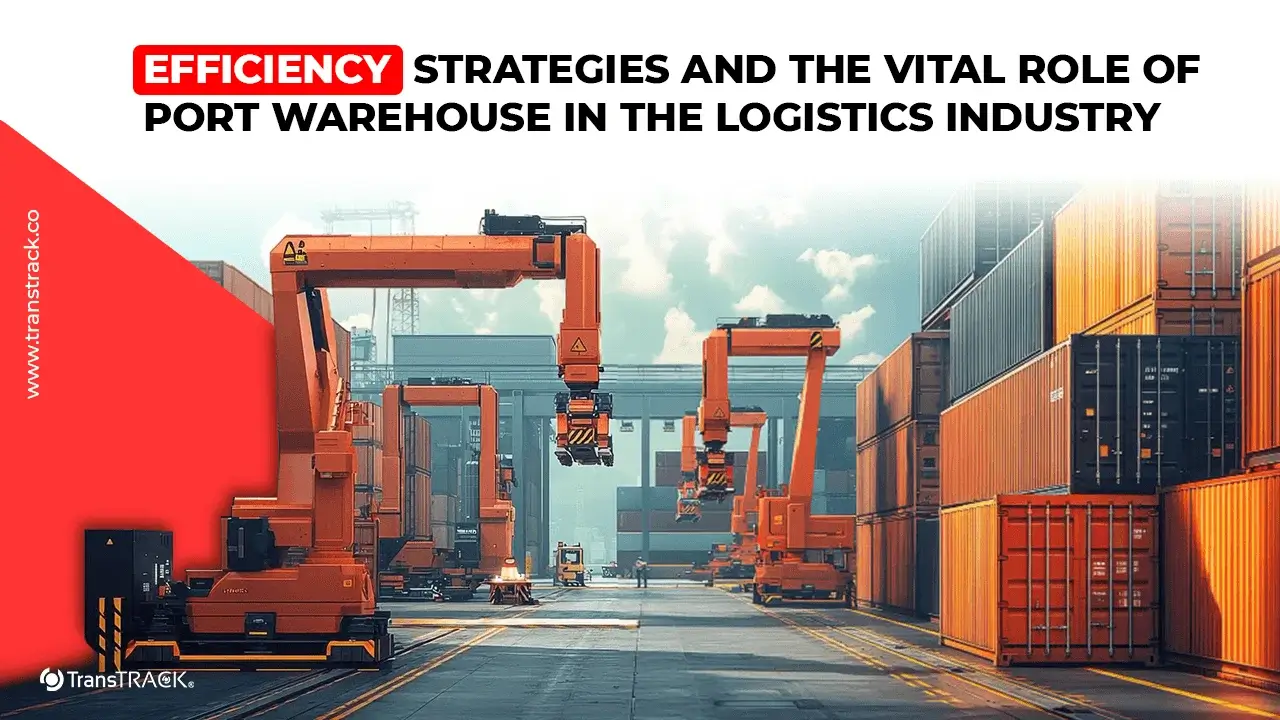
A port warehouse is a storage facility located within or in close proximity to a port area, designed to facilitate the loading and unloading of cargo to and from ships. These warehouses serve as strategic points in the distribution chain due to their position at the main gateway of global trade.
In supply chain operations, port warehousing functions as a buffer that balances the movement of goods between sea and land transportation. Without such facilities, misalignment between transport modes could lead to distribution delays.
With the growing adoption of port-centric logistics, many companies now prefer to process goods directly at the port rather than transporting them to inland warehouses. This approach helps accelerate distribution while reducing operational costs. Get to know more in this TransTRACK article!
Types of Port Warehouses Based on Function
Port warehouses come in several types, including:
1. Bonded Warehouse
A bonded warehouse is a storage facility for imported goods where import duties and taxes are deferred until the goods are released for local distribution. This policy helps improve a company’s cash flow.
2. Container Freight Station (CFS)
A CFS is commonly used for cargo consolidation (Less than Container Load / LCL) and deconsolidation. This facility is essential for handling smaller shipments from multiple shippers.
3. Cold Storage
Cold storage is a temperature-controlled warehouse designed for goods that are sensitive to temperature, such as frozen food, fresh products, and pharmaceuticals.
4. Bulk Storage
This type of storage is used for large quantities of bulk commodities such as coal, grains, cement, or chemicals.
Strategic Advantages of Using Port Warehouses
Utilizing a port warehouse offers numerous benefits for logistics players. In addition to cost efficiency, these facilities accelerate distribution processes due to their location at primary entry points. Other advantages include:
1. Cost Efficiency (Cost Reduction)
Using port warehouses helps reduce last-mile transportation costs and avoid demurrage fees caused by delays in container pickup.
2. Faster Distribution
Goods stored within port areas can be quickly distributed to various destinations, significantly improving lead time.
3. Value-Added Services
Port warehouses often provide additional services such as:
- Product labeling
- Repacking
- Quality control
- Sorting and kitting
These services enhance distribution efficiency before goods reach end consumers.
Modern Technologies in Port Warehouse Management
In today’s digital era, technology adoption is essential across industries. In port warehousing, modern technologies include:
1. Automated Storage and Retrieval Systems (AS/RS)
Robotic systems that enable automated storage and retrieval of goods, ideal for ports with limited space.
2. Integrated Warehouse Management System (WMS)
This system synchronizes warehouse inventory data with vessel manifests in real-time, improving accuracy and operational efficiency.
3. Internet of Things (IoT)
IoT sensors enable real-time monitoring of cargo conditions such as temperature and humidity, which is crucial for sensitive goods.
Operational Challenges in Port Warehousing
Despite its many benefits, port warehousing also faces several challenges:
1. Limited Space
Port areas have limited land availability, forcing operators to maximize vertical storage and rely on advanced storage technologies.
2. Strict Regulations
Port warehouses must comply with customs regulations and international security standards such as the ISPS Code.
3. Congestion
High volumes of logistics traffic can cause congestion around ports, requiring effective traffic management systems.
Conclusion
Choosing a reliable port warehouse service provider is crucial to ensuring smooth logistics operations. Companies should consider partners with systems integrated with port authorities and the capability to provide value-added services.
In the future, the logistics industry will increasingly depend on speed and data accuracy. Therefore, port warehousing will remain a key element in supporting global supply chain efficiency.
TransTRACK offers real-time vessel tracking in ports and at sea through its Vessel Monitoring System. TransTRACK provides cutting-edge solutions designed to reduce fuel consumption, speed up turnaround times, and improve coordination among shipping companies, port authorities, and logistics operators. Contact TransTRACK for more information and inquiries.
FAQ
What is the difference between a Port Warehouse and an Inland Warehouse?
The main difference lies in location and function. A port warehouse is located within the port area and handles cargo directly from ships, often with bonded status. Meanwhile, an inland warehouse is located further inland, typically closer to population centers or manufacturing facilities.
Why is a Bonded Warehouse important at ports?
Bonded warehouses allow importers to defer taxes and duties, helping maintain cash flow while waiting for buyers or regulatory approvals.
What are the risks of storing goods too long in a port warehouse?
The main risks include high storage costs, potential damage due to high humidity in port environments, and overstay charges if storage exceeds the allowed time limit.
Recent Post





Topic :