Bahasa Indonesia


Halal Supply Chain: Definition, Concept, and Its Application in Industry
Posted on March 20, 2026 by Nur Wachda Mihmidati
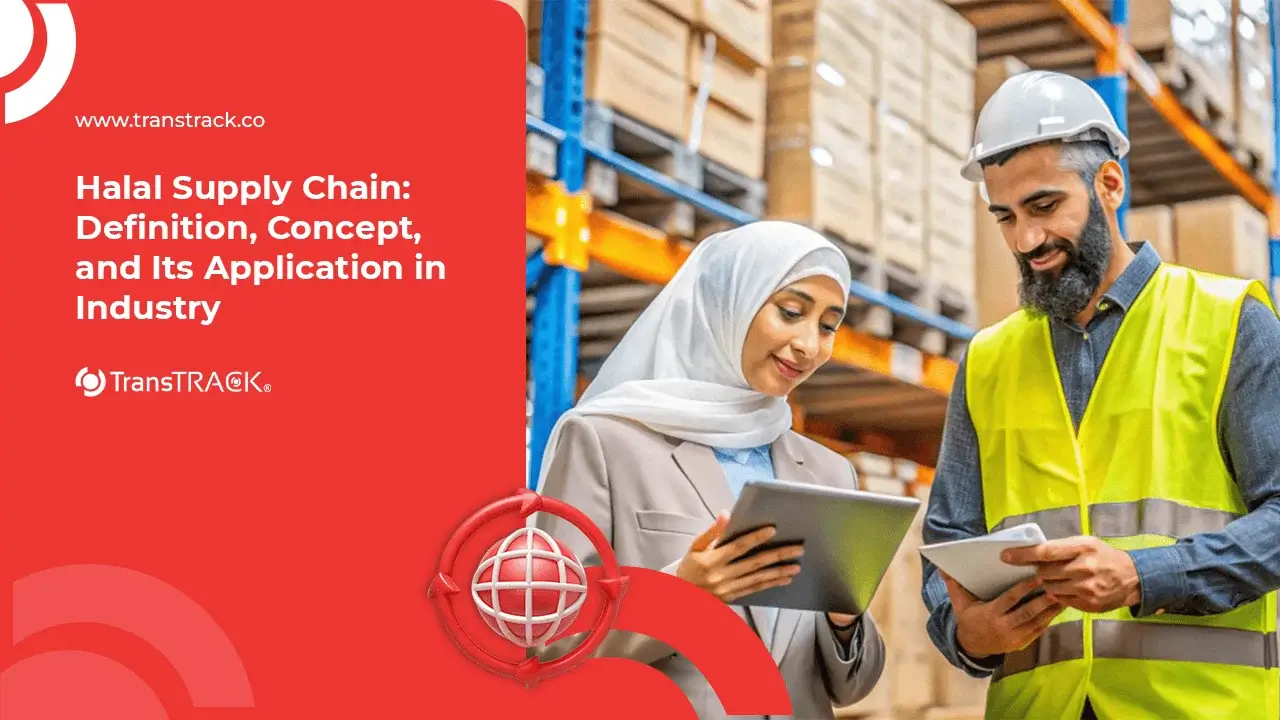
A halal supply chain is a supply chain management system that ensures all processes—from production, storage, and distribution to delivery to consumers—comply with Islamic laws and principles.
In practice, a halal supply chain does not only focus on raw materials but also includes logistics, transportation, and storage processes to prevent contamination with non-halal substances during distribution. Get to know more in this TransTRACK article!
Definition of Halal Supply Chain
The definition of a halal supply chain refers to the implementation of halal principles at every stage of the supply chain. This includes:
- Selecting halal-certified raw materials
- Production processes that comply with Islamic law
- Storage separated from non-halal products to prevent contamination risks
- Safe distribution that maintains halal integrity
Therefore, a halal supply chain becomes a crucial factor in maintaining consumer trust, especially in markets with a majority Muslim population.
Halal Supply Chain Management
Halal supply chain management is a strategic approach to managing supply chains based on halal principles. Its primary goal is to ensure that all operational activities meet established halal standards.
Key aspects of halal supply chain management include:
1. Traceability
Each product must be traceable, from the origin of raw materials to its final distribution.
2. Segregation
Halal products must be physically separated from non-halal products to prevent cross-contamination.
3. Halal Certification
All parties within the supply chain should ideally obtain halal certification from authorized institutions.
4. Hygiene Standards
Maintaining cleanliness in production and distribution facilities to comply with the thayyib principle (wholesome and hygienic).
Importance of Halal Supply Chain in Industry
The implementation of a halal supply chain is becoming increasingly important as consumer awareness of halal products continues to grow. Some of its benefits include:
- Increased customer trust
- Broader market expansion, especially to countries with large Muslim populations
- Compliance with halal regulations
- Reduced risk of cross-contamination
Industries such as food and beverage, pharmaceuticals, cosmetics, and logistics have begun adopting halal supply chain systems to ensure comfort and confidence for Muslim consumers.
Examples of Halal Supply Chain Implementation
Here are some common examples of halal supply chain practices:
- Food companies using halal-certified raw materials
- Logistics warehouses providing dedicated areas for halal products
- Transportation using fleets that are cleaned according to halal standards
- Retail ensuring halal products are not mixed with non-halal items
Challenges in Halal Supply Chain
Despite its many benefits, implementing a halal supply chain comes with several challenges, such as:
- Lack of uniform global standards
- High certification and implementation costs
- Complexity in supply chain monitoring
- Limited awareness among certain industry players
Digital Solutions for Halal Supply Chain
Challenges in halal supply chain implementation have led to innovative solutions, particularly through technology. Some commonly used digital solutions include:
Traceability
One of the biggest challenges is ensuring that product origins can be tracked from upstream to downstream. Many businesses struggle to trace raw materials, production processes, and distribution comprehensively.
As a solution, blockchain technology can be utilized. Blockchain enables transparent, immutable, and real-time data recording accessible to all stakeholders. This allows the halal status of products to be tracked accurately.
IoT & Sensors
Another challenge is maintaining product conditions during distribution, especially for cold chain products such as frozen food and pharmaceuticals. Risks of contamination or halal violations may occur if products are opened or mixed during transit.
The use of Internet of Things (IoT) and sensors helps address this issue. Sensors can monitor temperature, humidity, and location in real time. Additionally, they can detect unauthorized or accidental opening of product seals, ensuring product integrity until it reaches consumers.
Digital Certification
Halal certification processes often become a challenge, particularly in international trade. Differences in regulations across countries and manual administrative processes can slow down distribution.
The solution is adopting digital certification through systems like SIHALAL. Digitalization enables faster, more transparent, and standardized verification processes.
Conclusion
A halal supply chain is a vital system to ensure that product integrity is maintained from upstream to downstream. By implementing proper halal supply chain management, companies can not only maintain product quality but also enhance consumer trust and gain a competitive advantage in the industry.
As the halal industry continues to grow, understanding what a halal supply chain is and how to implement it becomes increasingly important for businesses across various sectors. TransTRACK, through its HalalLog System, ensures improved efficiency and compliance with halal standards in every logistics process.
With TransTRACK, transportation, inventory, and handling of halal-certified products are managed reliably and in accordance with Islamic principles through the HalalLog System.
FAQ
What is the difference between conventional logistics and halal logistics?
The difference lies in halal integrity. Halal logistics requires strict physical segregation to prevent cross-contamination with non-halal or impure products during storage and transportation.
What is the procedure for cleaning vehicles transporting halal goods (Sertu)?
If a vehicle has previously transported mughallazah impurities (e.g., pork products), it must undergo the sertu cleansing process—washing seven times with water, one of which must involve soil—before being used for halal logistics.
Do halal warehouses need separate buildings?
Not necessarily. Based on LPPOM MUI standards, warehouses may be located in the same building as long as there is clear physical segregation (e.g., permanent barriers, color-coded pallets, and separate administrative systems).
What is Halal Assurance System (HAS) 23000 in logistics?
HAS 23000 is a management system designed to ensure the continuity of halal production and distribution processes in accordance with fatwas issued by MUI.
Recent Post





Topic :