Bahasa Indonesia


How to Distribute Loads Using Load Balancing to Keep Vehicles Stable
Posted on March 23, 2026 by Nur Wachda Mihmidati
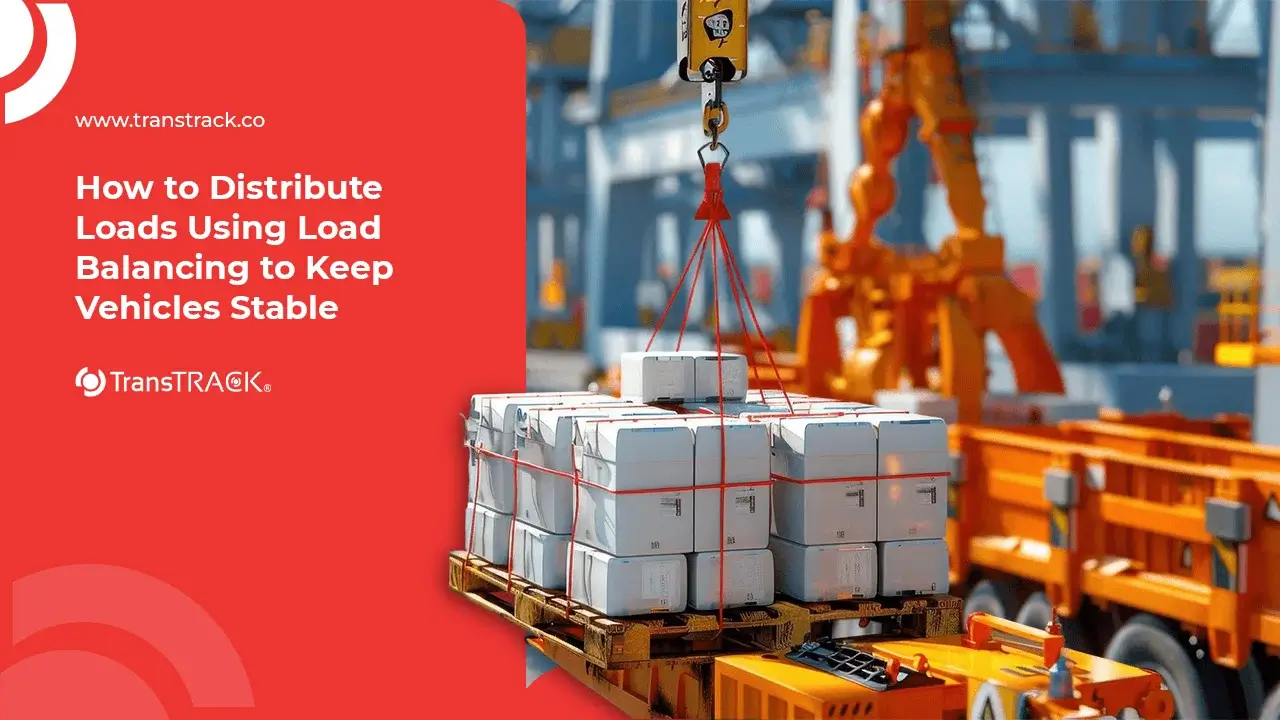
In the logistics and transportation industry, load balancing is a crucial factor that determines whether a vehicle remains stable, efficient, and safe while carrying cargo. Load balancing is a technique used to distribute weight proportionally so that no imbalance affects vehicle performance.
Uneven loads can have serious consequences, such as vehicle swaying, excessive pressure on one side leading to tire blowouts, and in the worst-case scenario, causing the vehicle to roll over.
This is closely related to basic physics principles, where the center of gravity plays a key role in vehicle maneuverability. The more uneven the load distribution, the more the center of gravity shifts away from its ideal position. As a result, the vehicle becomes harder to control and more prone to risks when turning or braking suddenly. Get to know more in this TransTRACK article!
Key Principles of Stable Load Distribution
Accurate load distribution is essential for maintaining vehicle stability, especially when carrying heavy cargo. It is not just about driving comfort—load balancing is critical for driver safety and vehicle control.
Understanding how to place loads properly can minimize risks such as swaying or even accidents. Here are some key principles:
60/40 Rule
Ideally, 60% of the load should be placed at the front and 40% at the rear to maintain optimal steering control and traction.
Lowering the Center of Gravity
Heavy items should be placed on the vehicle floor rather than on the roof rack to keep the center of gravity low and the vehicle stable.
Load Centralization
Cargo should be positioned between the two axles to maintain balance and prevent oversteer or understeer during maneuvers.
Steps to Proper Load Distribution
The load balancing process typically starts from planning to actual cargo arrangement. Here are the steps:
- Identify the weight of items
Calculate and label heavy items such as suitcases, water gallons, machinery, etc. - Placement strategy
Place the heaviest items in the lower middle section of the vehicle (near the axle). - Even distribution
Ensure the load is balanced on both the left and right sides to prevent tilting during movement. - Arranging lighter items
Place lighter items on top of heavier ones to help secure their position. - Using lashing (tie-downs)
Secure cargo with straps to prevent shifting during transit.
Benefits and Functions of Load Balancing
Load balancing allows for proper and efficient weight distribution when transporting goods. Its benefits and functions include:
Benefits of Load Balancing
Implementing load balancing provides real advantages such as:
- Improved safety for drivers, cargo, and vehicles
- Increased operational efficiency
- Better vehicle performance, reducing maintenance costs
- Faster and more accurate delivery times
- Reduced risk of exceeding load limits
Functions of Load Balancing
Beyond distributing weight, load balancing also serves to:
- Maintain vehicle stability during movement
- Reduce the risk of accidents caused by uneven loads
- Improve fuel efficiency
- Minimize cargo damage during delivery
- Extend vehicle lifespan by reducing excessive pressure on a single point
Types of Load Balancing
There are several methods used to optimize load distribution based on operational needs:
- Static Load Balancing
Load distribution is planned in advance and does not change during the journey. - Dynamic Load Balancing
Load distribution is adjusted in real time, usually with the help of technology or sensors. - Manual Load Balancing
Done without standardized guidelines, relying on experience. - Automated Load Balancing
Uses software or systems to optimize load distribution.
Impact of Improper Load Distribution on Vehicle Components
Improper load distribution not only affects stability but also puts excessive stress on critical components. Over time, this can reduce performance, accelerate wear, and increase maintenance costs. Other impacts include:
- Suspension damage due to uneven pressure, accelerating wear on shock absorbers, springs, and related components
- Uneven braking system performance, leading to overheating and increasing the risk of brake failure
- Higher fuel consumption due to increased rolling resistance and poor aerodynamics
- Uneven tire wear, leading to faster damage and higher risk of blowouts
- Chassis damage caused by uneven stress, potentially leading to deformation
- Steering issues, making handling heavier and less responsive
- Overworked transmission and engine, reducing performance and accelerating wear
- Shortened vehicle lifespan due to accumulated damage across components
Conclusion
From the explanation above, it can be concluded that load balancing plays a critical role in maintaining vehicle stability and ensuring smooth logistics operations. Understanding its definition and how it works helps companies optimize delivery processes without compromising safety for drivers and vehicles.
In addition to proper load distribution, companies should also conduct regular vehicle inspections to maintain safety and stability. Tire pressure should always be adjusted according to the load being carried. Drivers are also advised to check cargo periodically to ensure straps remain secure and prevent load shifting during the journey.
To maintain optimal load distribution on vehicles, TransTRACK—through its Fleet Management System—provides solutions for companies to ensure that cargo loads remain balanced and do not damage or affect vehicle performance. Contact TransTRACK today for offers and further information.

FAQ
What is load balancing in vehicles?
Load balancing in vehicles refers to systematically arranging cargo so that weight is evenly distributed across all wheels, keeping the center of gravity low and ensuring optimal steering control.
What happens if a vehicle load is unbalanced?
It can cause suspension damage, uneven tire wear, unstable braking, and increase the risk of rollover during sudden maneuvers.
Where is the best place to put the heaviest items?
The heaviest items should be placed in the center of the vehicle, as close to the floor as possible, between the front and rear axles.
What is the maximum safe load limit?
The maximum load limit can be found in the vehicle’s Gross Vehicle Weight Rating (GVWR) listed in the manual or on a sticker near the driver-side door pillar.

Recent Post





Topic :