Bahasa Indonesia


Strategies to Manage Empty Container Congestion at Ports
Posted on March 26, 2026 by Nur Wachda Mihmidati
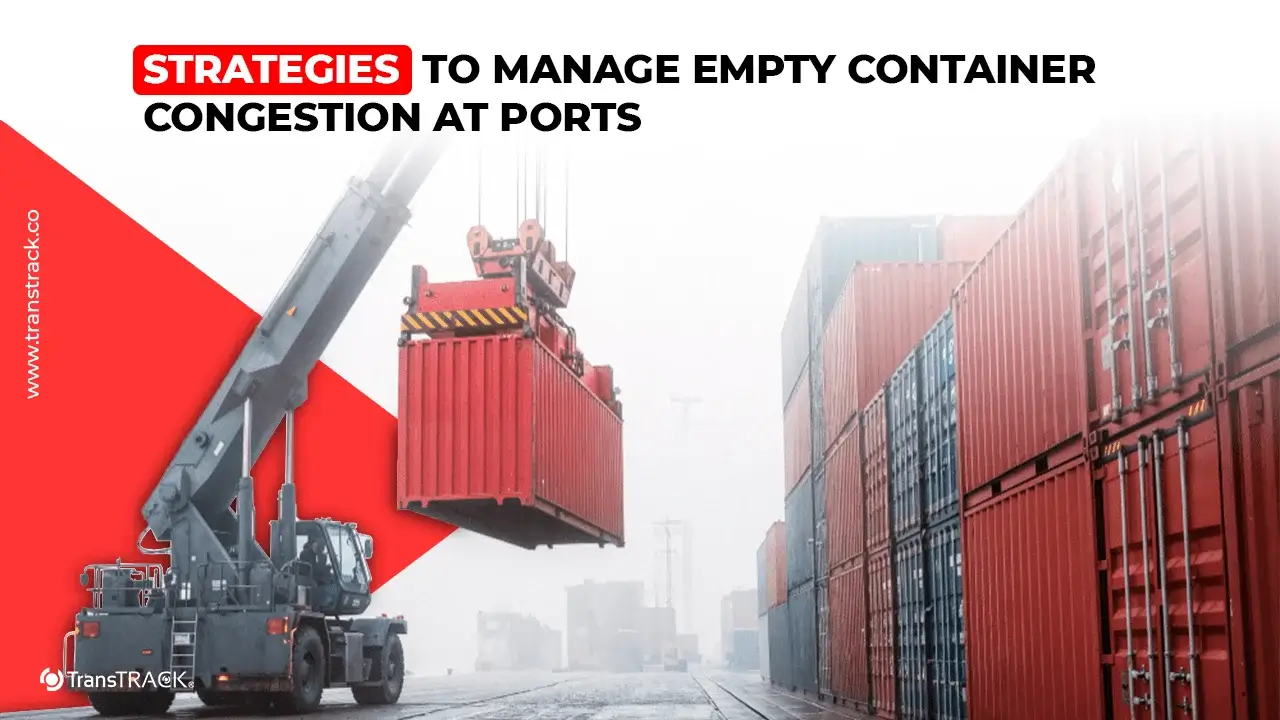
In the logistics and shipping industry, empty container refer to cargo containers that are not currently carrying any goods. An empty container is typically a unit that has completed a delivery and is awaiting reuse or repositioning.
The presence of empty containers is a normal part of the global supply chain. However, when they accumulate in large volumes, they can become a significant challenge and negatively impact port operations. Get to know more in this TransTRACK article!
Causes of Empty Container Congestion
The accumulation of empty containers at ports generally occurs due to several factors, including:
Trade imbalance
Countries that import more than they export tend to accumulate surplus empty containers.
Limited redistribution
The relocation of containers to inland or high-demand areas is often not optimal.
Limited empty container yard capacity
Designated storage areas for empty containers may lack sufficient space.
Delays in container transportation
Ships dedicated to transporting empty containers are not always available when needed.
Negative Impacts of Empty Container Congestion
Empty container buildup not only affects the visual aspect of ports but also disrupts operations. Some of the impacts include:
- Reduced capacity for loaded containers
- Increased operational costs for handling and storage
- Disruption of overall logistics flow
- Higher risk of container damage due to excessive stacking
Effective Strategies to Overcome Empty Container Congestion
Managing empty containers effectively is key to ensuring smooth port operations and maintaining supply chain efficiency. Without proper strategies, congestion can disrupt logistics performance. The following approaches can help address this issue:
Container Distribution Optimization
Companies need efficient distribution systems to ensure smooth relocation of empty containers to areas with higher demand. This helps balance supply and demand.
Leveraging Technology
Digital technologies such as fleet management systems and IoT enable real-time monitoring of container movements. In managing empty containers, these technologies help with:
- Tracking container locations
- Predicting container demand
- Optimizing distribution routes
Use of Specialized Equipment
Utilizing heavy equipment such as empty container handlers can significantly speed up loading, unloading, and stacking processes at ports.
Empty Container Yard Management
Proper management of empty container yards should include:
- Digital systems to monitor capacity
- Scheduling systems for container inflow and outflow
- Optimized yard layout planning
Stakeholder Collaboration
Coordination between port operators, shipping companies, and logistics providers can reduce congestion risks. Examples include:
- Shared storage facilities to reduce costs
- Synchronizing shipping schedules
- Sharing operational data
Optimization of Empty Container Ships
Scheduled deployment of empty container ships helps relocate containers to regions where they are needed. This strategy improves both distribution balance and supply chain efficiency.
The Role of AI in Container Management
The use of Artificial Intelligence (AI) in managing empty containers has become a strategic solution to improve port efficiency. AI contributes through several approaches:
Predictive Analytics
AI processes historical data such as cargo volume, vessel arrival patterns, and seasonal trends to forecast potential surges in empty containers. This allows port operators to prepare additional capacity and avoid excessive congestion.
Smart Stacking Algorithms
AI determines the most efficient stacking configurations. By analyzing usage frequency, destination, and departure schedules, the system calculates optimal container placement, reducing the need for reshuffling and minimizing operational time and equipment usage.
IoT & Real-Time Tracking
The integration of AI with IoT enables containers to be equipped with sensors for real-time monitoring. This provides full visibility into container location, status, and condition, reducing the risk of misplaced units while improving security and data accuracy.
Together, these technologies transform container management from reactive to predictive, integrated, and highly efficient.
Conclusion
Empty containers are an inevitable element of the global logistics system. However, when left unmanaged, they can create significant operational challenges and financial losses.
By implementing the right strategies—such as optimizing distribution, leveraging technology, and enhancing stakeholder collaboration—empty container congestion can be effectively addressed.
With proper empty container logistics management, companies can not only reduce operational costs but also improve the overall flow of goods.
Additionally, solutions like Smart Fleet Management Systems from TransTRACK enable companies to monitor fleets in real time and leverage data analytics to optimize operational performance.
FAQ
What is an empty container in logistics?
An empty container is a cargo unit that has been unloaded and is ready for reuse or repositioning.
Why does empty container congestion occur at ports?
It is mainly caused by trade imbalances, vessel scheduling delays, and limited depot capacity.
How can storage costs for empty containers be reduced?
By implementing strategies such as street turns, using off-dock depots, and accelerating repositioning to demand areas.
What is the best solution for container congestion at terminals?
Digitalizing truck queue systems, implementing buffer zones, and using analytics to predict container flow are among the most effective solutions.
Recent Post




Topic :