Bahasa Indonesia


Supply Chain Transformation through Intelligent Supply Chain Automation
Posted on February 17, 2026 by Nur Wachda Mihmidati
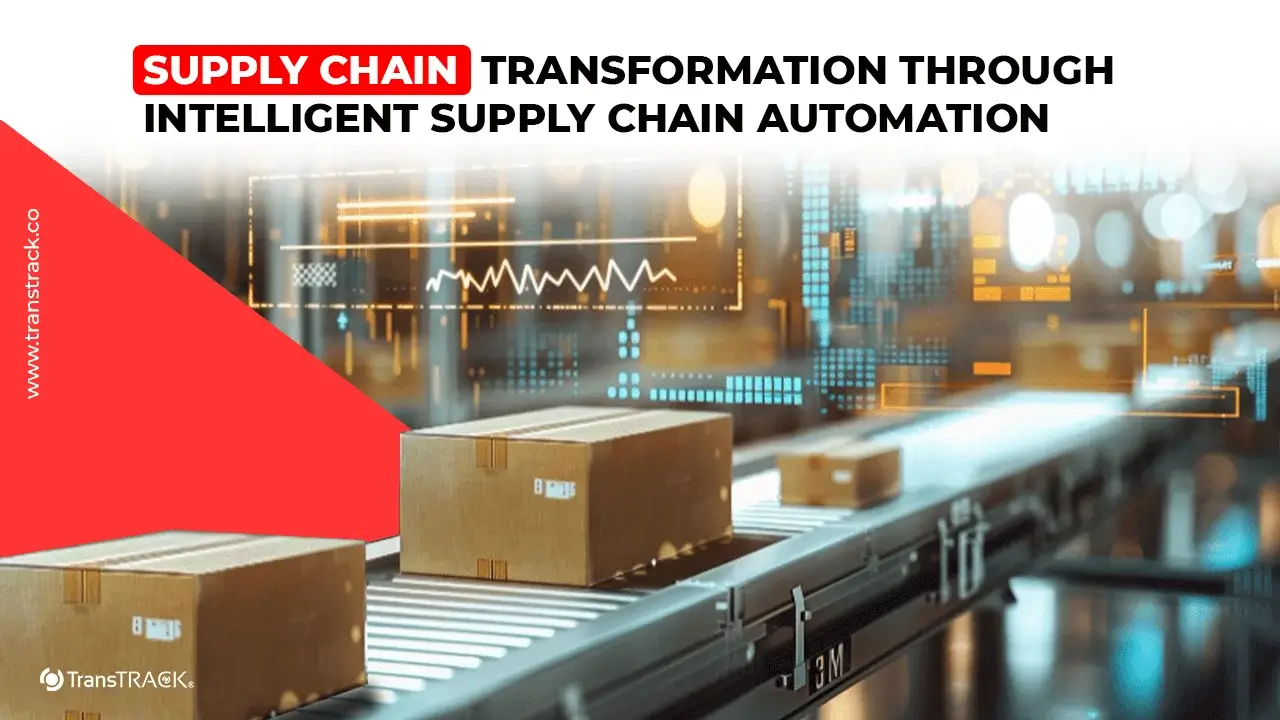
As global market demands become increasingly fast-paced and complex, companies must be able to manage their supply chains with high precision. Supply chain automation enables the integration of digital technology, robotics, and AI to minimize human error, speed up delivery, and improve operational transparency. With this strategy, businesses can remain competitive while being prepared to face the ever-changing dynamics of the market. Read the full explanation in the following article TransTRACK !
Why Automation Is No Longer an Option?
In the post-pandemic era, global supply chains face far greater complexity. Production disruptions, demand fluctuations, and logistical challenges make delivery speed and accuracy critical factors. The phenomenon known as the “Amazon Effect” emphasizes that consumers now expect fast and transparent delivery, forcing companies to increase the speed of their supply chain response. In this context, traditional manual intervention is no longer sufficient to meet market demands.
Supply Chain Automation is the application of digital technology, AI systems, and robotics to minimize manual involvement in the supply chain process. This includes warehouse automation, order processing, real-time inventory monitoring, and transportation management. The main objectives are to improve efficiency, accuracy, and operational speed.
Brief Statistics:
- According to McKinsey, companies that adopt supply chain automation can reduce operating costs by 20–30%.
- A Deloitte study shows that warehouse automation can increase productivity by up to 25%–40% compared to manual methods.
- Gartner projections estimate that the adoption of intelligent automation in the global supply chain will reach 50% by 2030, in line with increasing demand for efficiency and speed of delivery.
In an era of fast-paced consumers and increasingly complex supply chains, automation is no longer just a strategic option, but a necessity for maintaining competitiveness.
Key Components in Supply Chain Automation
Once you understand that automation is no longer just an option, it is important to know the key components that make Supply Chain Automation effective. These technologies work together to improve speed, accuracy, and operational efficiency across the supply chain.
Digital Process Automation (RPA – Robotic Process Automation)
RPA handles repetitive administrative processes, such as invoice processing, data entry, and order tracking. By reducing human involvement in routine tasks, companies can speed up workflows, reduce errors, and maintain data integrity throughout the supply chain.
Physical Automation (Robotics)
In addition to digital processes, physical automation through Automated Guided Vehicles (AGVs) and Autonomous Mobile Robots (AMRs) improves operational efficiency in warehouses. These robots can move goods, prepare orders, and fill shelves, enabling 24/7 operations with a lower risk of workplace accidents.
Artificial Intelligence (AI) & Machine Learning (ML)
AI and ML provide predictive capabilities for demand forecasting, delivery route optimization, and real-time inventory management. With intelligent algorithms, companies can adjust stock, minimize costs, and respond to demand fluctuations quickly and accurately.
Internet of Things (IoT)
IoT sensors monitor the condition of goods in real time, including temperature, humidity, and location. This data increases supply chain transparency, ensures product quality is maintained, and provides full visibility from the warehouse to final delivery.
Strategic Benefits of Supply Chain Automation
After understanding the main components of automation, the next step is to look at the strategic benefits that companies gain when adopting Supply Chain Automation. This technology not only improves operational efficiency, but also strengthens competitive position in the market.
- 99% Data Accuracy – Reduces human error in inventory recording and administrative processes, ensuring accurate data-driven business decisions.
- Reduction of Operational Costs – Reducing labor costs, minimizing energy waste, and optimizing resource utilization throughout the supply chain.
- Business Scalability – Enables companies to handle order surges without proportionally increasing manual workload, supporting faster business growth.
- Increased Customer Satisfaction – Faster delivery, more accurate demand forecasting, and order status transparency improve customer experience and loyalty.
These strategic benefits demonstrate that automation is not merely a matter of internal efficiency, but also a tool for meeting the demands of the modern marketplace and significantly improving a company’s competitiveness.
Implementation Steps: How to Get Started
After understanding the strategic benefits of automation, the next step is to learn the practical steps to get started with Supply Chain Automation. A phased approach ensures smooth technology adoption and delivers optimal ROI.
- Process Audit – Identify bottlenecks in the current manual system to determine the areas most in need of automation.
- Vendor & Tool Selection – Choose a SaaS platform, ERP system, or robotics provider that suits the scale and needs of your business.
- Data Integration – Ensure that ERP, WMS, and TMS systems can communicate with each other to support real-time data flow throughout the supply chain.
- Pilot Project – Implement automation in one department or production line first before expanding to the entire operation.
- Evaluation & Iteration – Use relevant KPIs to measure ROI, assess effectiveness, and make adjustments before full scale.
By following these steps, companies can begin automation in a structured manner, minimize risk, and ensure that technology has the maximum impact on supply chain efficiency and productivity.
Future Trend: Autonomous Supply Chain
After understanding how to get started with automation, it is also important to highlight future trends that will shape autonomous supply chains. This technology promises unprecedented levels of transparency, responsiveness, and security.
- Blockchain – Used for total transparency and data security, enabling every transaction and movement of goods to be permanently recorded and cannot be manipulated.
- Drone Delivery – Facilitates fast and efficient short-distance delivery (last-mile delivery), especially in densely populated or hard-to-reach areas.
- Self-Healing Supply Chains – Supply chain systems capable of automatically detecting and repairing disruptions using AI algorithms, ensuring operations continue even when unexpected problems arise.
Adopting this trend will help companies transition from traditional automation to autonomous supply chains, ready to face global market dynamics with maximum speed, security, and flexibility.
Conclusion
Supply Chain Automation is no longer just a trend, but a strategic necessity to address the complexity of modern supply chains. By combining RPA, robotics, AI/ML, and IoT, companies can:
- Improving operational efficiency and data accuracy.
- Reducing operational costs and improving business scalability.
- Providing fast delivery and full transparency for customers.
- Get ready for future trends such as blockchain, drone delivery, and self-healing supply chains.
To maximize the potential of automation, companies need the right technology integration and seamless coordination across the supply chain.
Improve the efficiency and visibility of your supply chain with TransTRACK’s Logistic Service Integrator, an end-to-end solution that combines advanced technology and logistics service integration for faster, safer, and more transparent operations.
FAQ: Supply Chain Automation
What are some real-world examples of supply chain automation?
Examples include automated sorting robots in Amazon warehouses, inventory systems that automatically reorder, and AI chatbots that provide real-time delivery status updates. All of these improve the speed and accuracy of supply chain processes.
How does AI work in supply chain automation?
AI analyzes historical and real-time data to predict demand and optimize production schedules. AI algorithms also determine the fastest logistics routes to reduce delays caused by traffic jams or bad weather.
Will automation replace humans in the supply chain?
Automation does not completely replace humans. The workforce is shifted to strategic roles such as data analysis and supplier relationship management.
What are the biggest challenges in implementing supply chain automation?
The main challenges are the high initial investment costs and integration with legacy systems. In addition, the workforce needs to be retrained to operate the new technology effectively.
How can companies begin implementation with minimal risk?
Companies can start with a process audit and pilot project in one department. This step allows for ROI evaluation before automation is expanded to the entire operation.
Recent Post





Topic :