Bahasa Indonesia


Mining Logistics Efficiency with Barges and Tugboats
Posted on February 18, 2026 by Nur Wachda Mihmidati
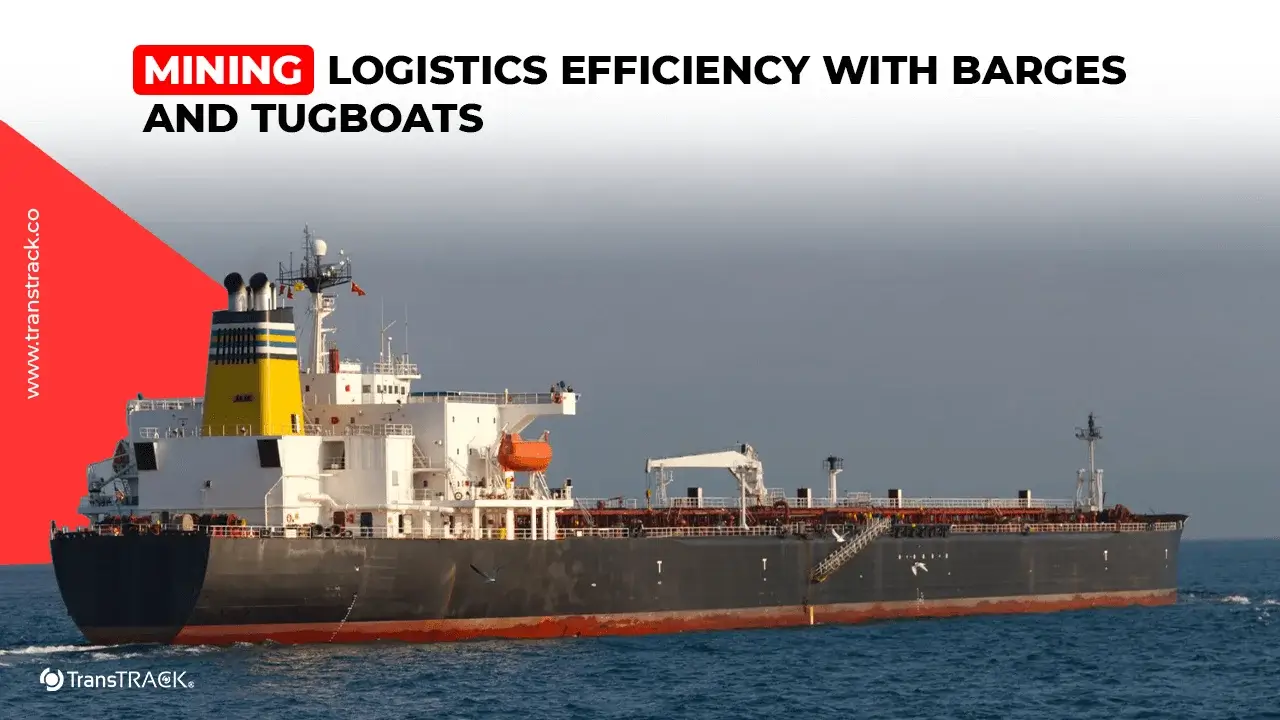
In the mining sector, the shipment of coal and heavy materials often relies on a combination of barges and tugboats. Barges serve as large, engine-less cargo carriers, while tugboats provide power and control for navigation. Understanding the functions, capacities, and supporting technologies of both is essential to ensuring that fleet operations run safely, efficiently, and on time. Read the full explanation in the following TransTRACK article!
Getting to Know Barges and Tugboats in the Mining Industry
In the distribution of coal from mining areas to ports or transshipment points, the combination of barges and tugboats plays a crucial role. The two work as a single system: barges carry the cargo, while tugboats provide propulsion, directional control, and navigational safety.
Understanding functions and capacity standards is important for logistics planning, delivery time estimation, and freight cost optimization.
Barge
Barges function as floating warehouses for transporting coal. These ships generally do not have their own engines, so they require the assistance of tugboats to move from one location to another. They are designed to be wide with large cargo spaces so that they can carry the maximum volume of material in a single trip.
Tugboat
Tugboats are the main source of power in operations. These vessels determine travel speed, maneuverability in narrow rivers, and control during docking and undocking. The performance of tugboat engines greatly affects the efficiency of the shipping cycle.
Coal Barge Capacity Standards
In industrial practice, there are several commonly used barge sizes:
- 230 feet → capacity of approximately ± 4,000 MT
- 270 feet → capacity of approximately ± 6,000 MT
- 300 feet → capacity of approximately ± 8,000 MT
- 330 feet → capacity of approximately ± 10,000 – 12,000 MT
The selection of size is usually adjusted to the depth of the shipping channel, distance traveled, and the target productivity of coal delivery.
Effective Fleet Management Strategies
Tug and barge operations in the mining industry demand punctuality, cost efficiency, and high safety standards. Therefore, fleet management cannot rely solely on field experience; a systematic, data-driven approach is needed to ensure that each trip yields maximum productivity and minimal risk.
Here are some key strategies that are commonly implemented.
- Dynamic Scheduling: Synchronize loading times with river tides to avoid queues and maximize vessel utilization.
- Fuel Monitoring System: IoT sensors monitor tugboat fuel consumption, prevent theft, and optimize engine efficiency.
- Preventive Maintenance: Regular docking and hull inspection of barges to prevent leaks and cargo damage.
- Crew Management: Ensure that the crew is certified according to international safety standards (ISM Code).
Technology in Modern Barge Management
Digital technology now facilitates the management of barges and tugboats. Monitoring of position, engine performance, and cargo can be done in real time for safer and more efficient operations.
AIS (Automatic Identification System)
AIS enables accurate tracking of fleet positions. With real-time data, coordination between ships becomes easier and the risk of collision can be minimized.
Machine Telemetry
Telemetry remotely monitors the health of tugboat engines. Early detection of engine problems enables preventive maintenance so that operations are not disrupted.
Logistics Management Software
This software integrates cargo manifest data with trip reports. This facilitates efficiency analysis and fleet operational planning.
Benefits of Combining Technologies
The use of AIS, engine telemetry, and logistics software increases fleet productivity. Downtime is reduced and the delivery of coal or mining materials is smoother.
Risk Mitigation in Fleet Operations
The operation of barges and tugboats faces various natural and technical risks. Proper mitigation is essential to ensure safety, cargo security, and continuity of delivery.
Facing the Dry Season
When river water levels are low, barge navigation becomes more difficult. Dynamic scheduling and vessel draft management help reduce the risk of grounding.
Safety Procedures during Bad Weather
Bad weather on the high seas can endanger the fleet. Implementing safety SOPs, regular communication with ships, and monitoring weather conditions are key to preventing accidents.
Cargo Insurance and Hull Protection
Cargo insurance and hull protection through the P&I Club provide financial security. This reduces losses in the event of damage to cargo or the ship.
Conclusion
The combination of barges and tugboats is the backbone of coal and mining material transportation. Operational efficiency depends on proper fleet management, routine maintenance, and monitoring of natural and technical risks. Technologies such as AIS, engine telemetry, and logistics management software help ensure that every trip is safe and productive.
To optimize fleet performance, use TransTRACK’s Vessel Monitoring System (VMS). This solution enables real-time monitoring of vessel position, speed, and health, facilitating decision-making and improving the safety and productivity of your fleet.
FAQ: Barges
What is the load capacity of a 300-foot barge?
A 300-foot barge can typically carry between 7,500 and 8,000 metric tons (MT) of coal. This capacity may vary depending on the ship’s draft and water conditions.
What is the main function of tugboats in coal shipping?
Tugboats are used to pull or push barges that do not have their own engines. In addition, tugboats help maneuver barges when entering docks or facing strong river currents.
Why does mining logistics often use barges?
Barges are more cost-effective per ton than trucks. In addition, barges can transport large volumes at once and effectively reach mining areas in the interior via large rivers.
What is the “Ship-to-Ship” (STS) system on barges?
STS is the process of transferring cargo from barges directly to large mother vessels in the middle of the sea. This system facilitates coal exports without having to go to large ports.



Topic :