Bahasa Indonesia


Operational Efficiency of Barges: Strategies and Technologies for Lower Costs
Posted on January 27, 2026 by Nur Wachda Mihmidati
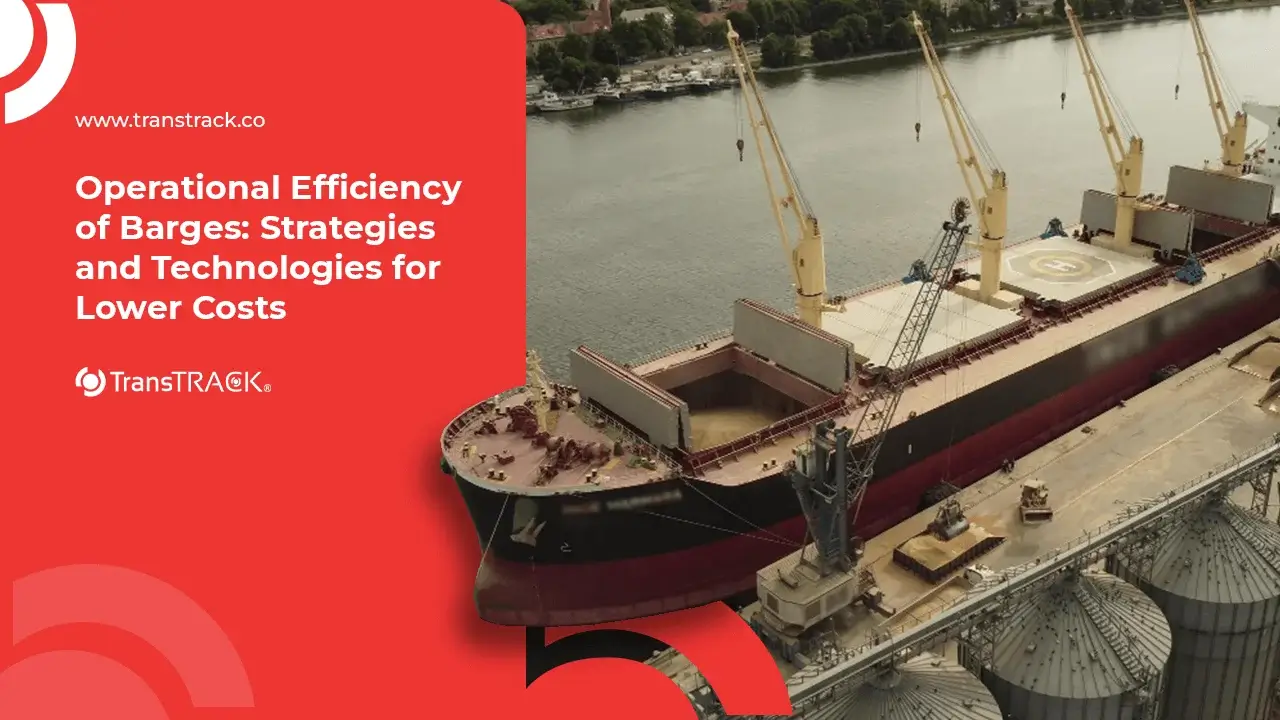
In the modern era, barges management no longer relies solely on experience, but is increasingly enriched by digital technology that enables real-time fleet monitoring, load optimization, and data integration with mine production systems. This article TransTRACK discusses various efficiency strategies, the role of technology, compliance and safety (HSE) aspects, and the future potential for greener and more affordable barge logistics.
Understanding Barges Operational Cost Variables
The operating costs of a barge consist of several main components that influence each other. Direct costs include expenses directly related to shipping activities, such as fuel consumption, crew wages, and ship rental. Meanwhile, indirect costs include routine maintenance and repairs, port or jetty berthing fees, and ship and cargo insurance. Beyond that, there are external factors that are often difficult to control, such as river tide conditions that affect draft and sailing time, as well as shipping lane congestion that can increase waiting time and fuel consumption.
Efficiency Strategy 1: Cycle Time Optimization
Cycle time optimization is key to reducing barge operating costs without compromising delivery reliability.
- Reducing dwelling time can be achieved by accelerating coordination between the mining jetty and barge operators, thereby minimizing waiting times for docking and loading.
- Economical speed management is carried out by determining the most efficient speed that can reduce fuel consumption while still maintaining compliance with the delivery schedule.
- The digital queue system enables structured scheduling of ship arrivals, thereby avoiding congestion at river mouths or docks and significantly reducing ship idle time.
Efficiency Strategy 2: Maximizing Load and Stability
Maximizing cargo while maintaining ship stability plays a major role in improving barge operation efficiency.
- Accurate draft surveys ensure that cargo volume is maximized according to the ship’s capacity without violating safety and shipping regulations.
- Proper load distribution through loading pattern adjustments helps maintain stability, prevent damage to the barge structure, and speed up the loading and unloading process.
- Cargo monitoring technology to support accuracy and transparency, such as cargo level sensors or the use of drones, can be used to verify cargo volume in real time, thereby reducing the risk of cargo discrepancies and operational claims.
Efficiency Strategy 3: Preventive Maintenance & Tugboat Management
Planned preventive maintenance, especially on tugboats, plays an important role in maintaining the operational efficiency of the tug and barge fleet.
- The synergy between tugboats and barges determines the overall performance of the voyage, as the condition of the tugboat’s engine and propulsion system greatly affects fuel consumption and the ability to pull cargo steadily.
- Scheduled docking helps prevent the risk of sudden breakdowns mid-voyage, which could potentially halt the supply flow and incur significant additional costs.
- The selection of anti-corrosion materials, such as high-quality hull paint and corrosion protection systems, is a long-term investment to extend the service life of the ship while maintaining optimal hydrodynamic performance.
The Role of Technology in Modern Barge Efficiency
Technology is key to improving barge operational efficiency. Digital systems help reduce costs, speed up decision-making, and maintain a smooth supply chain. With proper integration, the entire maritime logistics process becomes more transparent and measurable.
AIS & GPS Tracking
AIS and GPS enable real-time monitoring of fleet positions. This helps make estimated time of arrival (ETA) more accurate. Coordination with jetties and docks also becomes more efficient.
Fuel Monitoring System
The Fuel Monitoring System monitors fuel consumption in real time. This system prevents fuel leaks and loss during travel. Consumption data also supports the ship’s economical speed settings.
Mining ERP Integration
ERP integration connects mining production data directly with maritime logistics. This facilitates data-driven fleet planning. Waiting time at the dock can also be minimized.
Compliance and Safety Aspects (HSE)
Compliance and safety are crucial aspects of barge operations. The implementation of HSE standards not only protects the crew and cargo, but also minimizes the risk of fines, losses, and operational disruptions.
Maritime Regulation
Compliance with maritime regulations is mandatory for every barge operator. This compliance helps avoid fines, vessel detention, or administrative sanctions. In addition, regulations ensure that operations are conducted in accordance with international and local safety standards.
Weather Risk Mitigation
Weather prediction systems are used to anticipate extreme conditions along shipping routes. With this information, operators can adjust routes or schedules, thereby reducing the risk of shipwrecks or cargo spills. These proactive measures improve crew safety and maintain cargo integrity.
Conclusion: A Greener and More Affordable Future for Barge Logistics
Operational efficiency of barges is not only about cutting costs, but also ensuring smooth synchronization of data and processes between the fleet, jetty, and cargo recipients. With the use of technology, every operational decision can be made based on real-time data, from route optimization and fuel monitoring to accurate cargo management.
Looking ahead, the potential use of alternative fuels and electric barges promises reduced emissions and lower operating costs. To achieve maximum efficiency and operational safety, TransTRACK’s Vessel Monitoring System provides an end-to-end solution. This system enables real-time fleet monitoring, fuel consumption monitoring, and full integration with mining ERP, making barge operations more efficient, safe, and environmentally friendly.
Operational FAQs for Barges
What is the standard capacity of a barge for coal?
The standard capacity of coal barges usually ranges from 500 to 3,000 DWT, depending on the type and operational route. This capacity is adjusted to the depth of the river or dock, as well as cargo safety regulations.
What is the biggest factor causing fuel waste on tugboats?
The main factors are speeds that are not in line with economical speeds and suboptimal engine performance. Poorly maintained engines or the use of low-quality fuel can also increase fuel consumption.
How do river tides affect shipping efficiency?
Tides affect barge draft, sailing speed, and waiting time at the dock. Low river water levels can limit maximum load, while high currents can slow down travel and increase fuel consumption.
What is the difference in efficiency between spot charter and long-term contract systems?
Spot charter is flexible, but the risk of idle time and variable costs are higher. Long-term contracts enable more stable fleet planning, load optimization, and long-term cost efficiency through schedule synchronization and consistent fleet utilization.
Recent Post



Topic :