Bahasa Indonesia


The Role of E-Seals in Improving Logistics Distribution Efficiency
Posted on January 22, 2026 by Nur Wachda Mihmidati
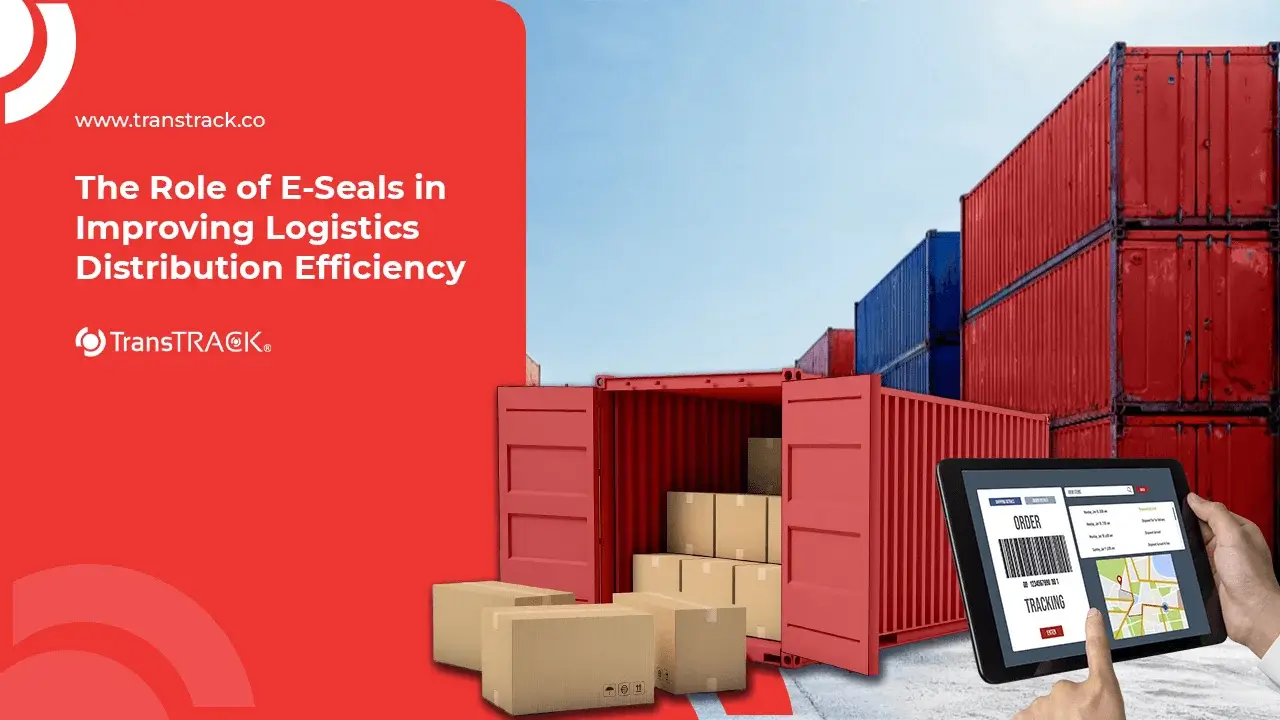
Goods distribution is the most crucial stage in the supply chain, where speed, security, and accuracy of information must go hand in hand. However, in practice, many distribution processes still rely on manual checks and limited visibility, making them prone to delays, losses, and additional costs.
Amidst increasing demands for efficiency and transparency, E-Seal TransTRACK (Electronic Seal) is a digital solution that ensures cargo integrity while improving distribution operational performance. By combining electronic security technology and real-time monitoring, E-Seal enables companies to manage distribution in a more secure, measurable, and controlled manner from origin to destination.
What is an E-Seal in the Context of Logistics?
E-Seal is an electronic security device used to seal containers or logistics vehicles (trucks), equipped with tracking technology such as GPS and/or RFID, as well as sensors that detect illegal opening, in order to maintain the integrity of the cargo during the shipping process.
E-Seal works by sending real-time digital signals to central systems such as Fleet Management System (FMS) or Transportation Management System (TMS). If the seal is opened, tampered with, or an anomaly occurs before the vehicle or container arrives at its designated destination, the system will immediately trigger an alert notification for security measures and further investigation.
How Does E-Seal Improve Distribution Efficiency?
In modern distribution practices, operational efficiency is determined not only by delivery speed, but also by security, visibility, and data accuracy throughout the supply chain. The implementation of E-Seal is one of the key strategies to eliminate slow and risky manual processes, while improving end-to-end distribution control.
Accelerating the Inspection Process (Quick Clearance)
Manual physical seal inspections are time-consuming and labor-intensive, especially at points with high vehicle volumes. With E-Seal, officers simply perform a digital scan or check the system dashboard to ensure that the seal is intact and corresponds to the delivery route.
Benefits:
- Speed up the gate-in and gate-out processes at warehouses, terminals, and ports
- Reducing vehicle queues and operational waiting times
Real-Time Location and Cargo Status Visibility
E-Seals are typically integrated with GPS, so companies not only know the position of their vehicles, but also the status of their cargo—whether the seal is still secure or has been opened at a certain point.
Operational Value:
- Improving distribution visibility from origin to destination
- Enables real-time and continuous cargo monitoring
Theft Risk Mitigation and Claims
E-Seal is capable of detecting attempts at forced or unauthorized opening immediately. The system will send an early warning so that the operational team can immediately take corrective action.
Benefits:
- Reduce the risk of loss and theft of goods
- Simplifying the insurance claim process with the support of valid digital data
Automation of Administration and Reporting
All important distribution activities—from departure and arrival times to the breaking of seals—are automatically recorded in the system without manual recording.
Benefits:
- Reducing dependence on manual administrative processes
- Improving the accuracy of distribution data for reporting, auditing, and performance evaluation
Comparison: Conventional Seals vs. E-Seals
To understand the strategic value of E-Seals in modern logistics operations, it is important to look at how they differ from conventional seals. The following comparison highlights how the shift from manual seals to electronic seals impacts security, visibility, and distribution efficiency.
| Aspek | Conventional Seal | E-Seal (Electronic Seal) |
| Form & Technology | Physical/manual seal | Electronic seals with sensors & connectivity |
| Monitoring | Not available | Real-time monitoring (status & events) |
| Illegal Opening Detection | Known after arriving at the destination | Detected immediately when the incident occurred |
| Field Verification | Manual visual inspection | Digital verification via system/dashboard |
| System Integration | Not integrated | Integrated with FMS/TMS/Control Tower |
| Distribution Visibility | Limited | End-to-end visibility |
| Proof of Security | Physical evidence, susceptible to manipulation | Digital data, time stamps, and automatic logs |
| Risk of Human Error | Height | Low (system automation) |
| Operational Efficiency | Low at high volume | Tall, supports quick clearance |
| Audit & Claims Support | Difficult and manual | Easy, based on historical data |
Integration of E-Seal with the TransTRACK Platform
As part of the digital logistics ecosystem, E-Seal does not stand alone. Its maximum value is achieved when E-Seal is directly connected to an integrated platform capable of processing data into operational insights. This is where TransTRACK plays a role as a link between physical cargo security and digital distribution control.
- E-Seal TransTRACK is directly integrated with Fleet Management System (FMS) in a single integrated dashboard. Users can monitor vehicle locations, seal status, trip history, and event times in real time, enabling end-to-end distribution visibility without having to switch between systems.
- The TransTRACK platform is equipped with an automatic alert mechanism that will send notifications directly to the application or central system in the event of an anomaly with the seal, such as unauthorized opening, route violations, or stopping at unregistered points. This allows the operations team to take quick action before the risk develops into a loss.
Conclusion
Distribution efficiency no longer depends solely on delivery speed, but on comprehensive control, visibility, and security of cargo. Through the implementation of E-Seal, companies can accelerate the inspection process, improve real-time distribution visibility, mitigate the risk of theft, and automate administration and reporting. All of these benefits contribute directly to reducing operational costs and improving supply chain reliability.
With E-Seal integrated into the TransTRACK platform, cargo security data is directly connected to the fleet management system and logistics control tower. The result is end-to-end visibility, rapid response to anomalies, and more accurate data-driven decision making.
It’s time to switch from conventional security to measurable digital solutions. Optimize distribution efficiency and protect your cargo with E-Seal from TransTRACK—a smart solution for secure, transparent, and controlled distribution.
FAQ: E-Seals and Distribution Efficiency
Can E-Seal be used for international shipping?
Yes. E-Seal is highly recommended for long-distance and cross-border shipments because it supports international security standards. Digital data from E-Seal facilitates monitoring, inspection, and auditing at various transit points.
How does E-Seal help reduce logistics costs?
E-Seal helps reduce costs by speeding up the inspection process (quick clearance) and reducing the risk of cargo loss or theft. This results in lower operating costs, insurance claims, and potential distribution disruptions.
Does E-Seal have to be used with a specific system?
For maximum results, E-Seal should be integrated with a Fleet Management System (FMS) or Logistics Control Tower, such as TransTRACK, so that location data, seal status, and distribution activities can be managed on a single platform.
Is the use of E-Seal complicated for the operational team?
No. On the contrary, E-Seal simplifies operations because verification, notifications, and reports are carried out automatically through a digital dashboard without time-consuming manual processes.
Recent Post



Topic :