Bahasa Indonesia

Fatal Business Risks Without Integrated Fleet Management
Posted on December 16, 2025 by Nur Wachda Mihmidati
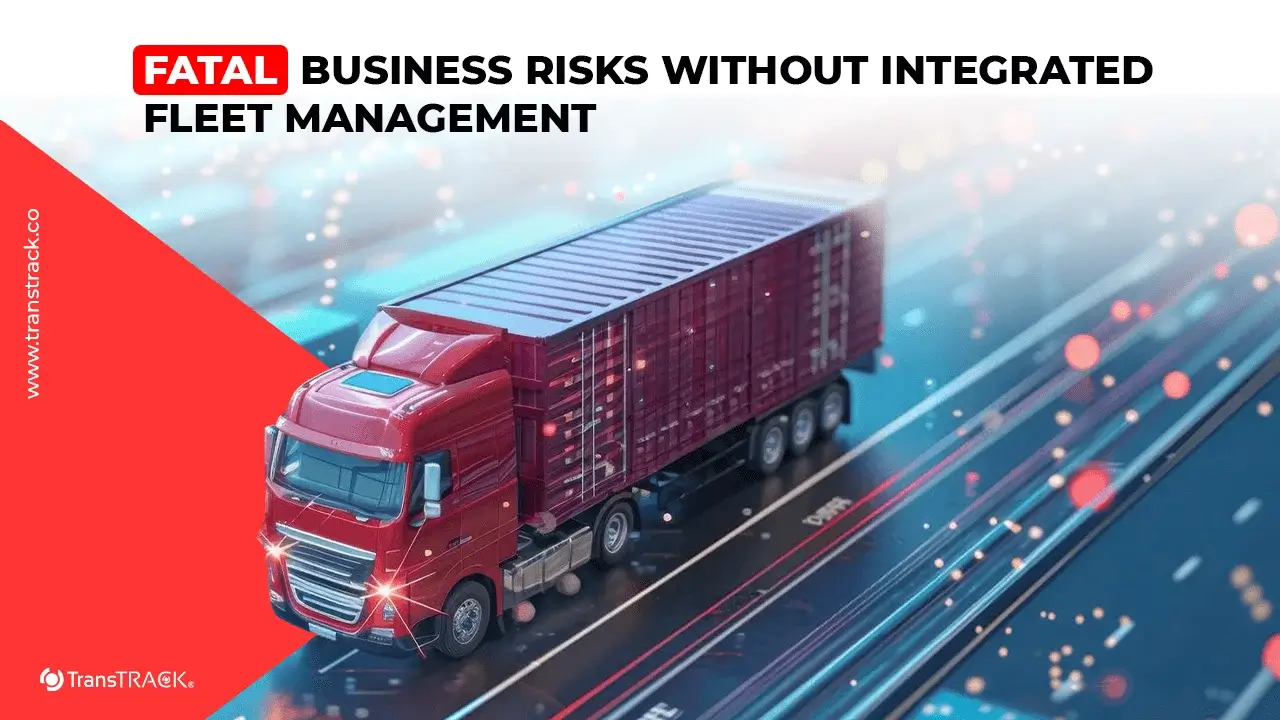
Logistics operational costs in Indonesia are extremely high; in fact, the sector alone can reach around 23–24% of Gross Domestic Product (GDP), and unfortunately, inefficiency is a major contributing factor. Currently, many companies still manage their fleets manually using spreadsheets or communicating via WhatsApp and phone, making it difficult to track large numbers of assets. Without the support of a proper fleet management system such as a Fleet Management System (FMS), companies are vulnerable to operational “blind spots” that directly impact profitability. Get to know more in this TransTRACK article!
What is a Blind Spot in Fleet Management?
A blind spot in fleet management is a specific area or operational aspect that isn’t monitored in real time by management, such as vehicle position, driver behavior, fuel consumption, or vehicle condition. If left unchecked, these blind spots can lead to undetected waste, SOP violations, safety risks, and even the potential loss of assets. The impacts can be significant, ranging from spiraling and uncontrolled operational costs to a decline in business reputation due to delays or accidents.
Key Challenges Without a Fleet Management System
Today, many companies face limitations in comprehensive, real-time fleet monitoring without a fleet management system. This creates operational gaps that are prone to inefficiencies, cost overruns, and even safety risks. Here are some of the key challenges without an FMS:
Fuel Fraud & Wastage
- Problem:Without adequate sensors or modern monitoring systems, it is difficult to detect irregularities (indications of fuel theft and diesel fuel leakage) or waste due to poor driving style.
Unmonitored Driver Behavior
- Problem:There is no accurate data regarding the actions of speeding, harsh braking, or excessive idling time duration.
- Impact:Increases the risk of accidents and accelerates engine damage.
Theft and Misappropriation of Assets
- Problem:Vehicles are used outside of working hours or on designated routes (route deviations occur)
- Risk: Loss of high value assets without a clear trace (less effective manual geofencing)
Unplanned Downtime
- Problem:Relying on memory or paper records regarding vehicle engine preventive maintenance and repair schedules
- Impact:Sudden breakdown in the middle of the road
- Late deliveries disrupt the supply chain
- The cost of “corrective” repairs is much more expensive than “preventive” repairs.
Time and Route Inefficiency (Route Optimization)
- Problem:Drivers will have their own routes without sufficient knowledge of the conditions of the chosen route (possibility of traffic jams, road damage, etc.)
- Impact:Inefficiency in time and fuel consumption, as well as the risk of SLA (service level agreement) not being achieved
Manual Administration Prone to Human Error
- Problem:Piles of paper reports and delivery notes that are prone to being lost
- Manual data input into data collection applications such as spreadsheets and Excel is time consuming and prone to human error (data errors that can have fatal consequences).
Comparison: Manual vs Digital Fleet Management (FMS)
| Aspects | Manual Management | Management with Fleet Management System (TRANSTRACK) |
| Tracking | Phone / WhatsApp Drive (not real time) | GPS Real Time Tracking & Geofencing |
| Fuel | Fuel receipt (can be manipulated) | Accurate Fuel Monitoring Sensor |
| Treatment | Waiting for damage before servicing | Automatic service schedule notifications |
| Report | Manual end-of-month recap | Automated dashboards and data analytics |
Solution: Transformation to the TransTRACK Fleet Management System
Relying on manual methods for fleet management in today’s digital age is no longer effective. To address challenges such as blind spots, cost inefficiencies, and operational risks, companies need an integrated solution. Transforming to a digital fleet management system is a strategic step to improve overall visibility, control, and productivity.
All fleet management challenges—from trip delays and fuel waste to unmonitored driver behavior—can be addressed through a single, integrated platform. TransTRACK offers a modern, technology-based fleet management solution with superior features like real-time tracking, fuel monitoring, and driver behavior scoring. With this approach, businesses not only become more efficient but also easier to control and optimize across the board.
Conclusion
Amidst increasingly fierce business competition, leveraging technology in fleet management is no longer an option but a necessity. Efficiency, transparency, and operational control can now only be optimally achieved through modern, integrated technology-based solutions. Managing a fleet, especially a large one, is no easy feat. Manual fleet management can leave companies facing numerous limitations that can be detrimental. Therefore, it’s time to switch to a modern fleet management system like TransTRACK to maintain your business’s profitability and competitiveness.
Don’t let your business profits be eroded by inefficiencies—consult your fleet management needs with the TransTRACK team today for a free demo.
FAQ
What is the biggest risk of not using a GPS tracker on a business fleet?
The biggest risks are loss of asset visibility, fuel theft, and unexplained operational cost overruns.
How does FMS help reduce operational costs?
FMS monitors fuel usage, optimizes routes, and prevents fatal engine failures through preventative maintenance.
Can FMS help monitor driver behavior?
Yes, FMS can help monitor driver behavior by recording driving patterns such as overspeeding, sudden braking, and idle time duration, which directly impact operational efficiency and safety.
How does FMS improve delivery schedule efficiency?
With real-time tracking and automatic route planning features, FMS helps avoid congestion and delays, ensuring on-time delivery.
Can FMS be used for audits and performance reporting?
Yes, FMS stores historical trip data, fuel consumption, and vehicle condition reports to support analysis and decision making.
Recent Post



Topic :