Bahasa Indonesia


Implementing Digitalization in Selecting the Most Accurate Fuel Meters for Your Fleet
Posted on December 26, 2025 by Nur Wachda Mihmidati
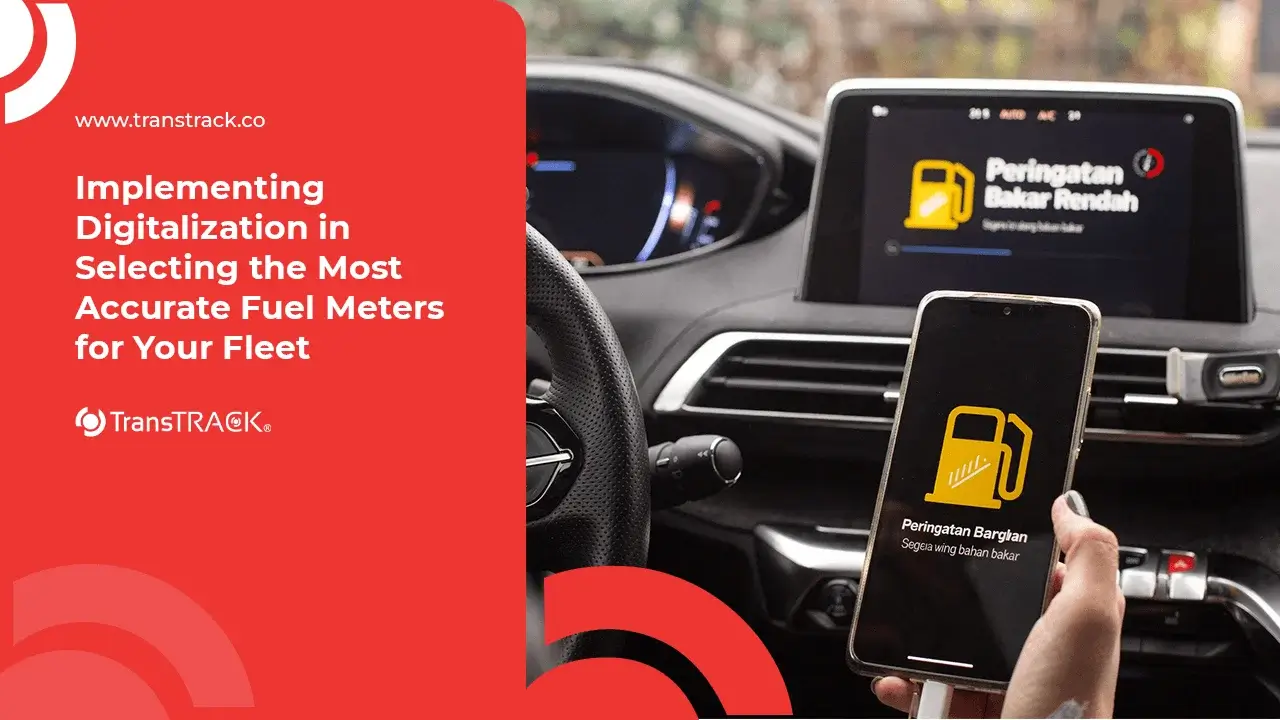
Fuel costs are one of the biggest operational burdens for logistics fleets. Unfortunately, companies often rely on assumptions when calculating and analyzing fuel consumption data, without the support of accurate measuring instruments. This can increase the risk of theft and loss due to imprecise calculations. In today’s digital age, companies are required to choose modern and sophisticated technology, such as fuel meters that can provide real-time, bias-free data, as the primary foundation for fuel-saving strategies. Get to know more in this TransTRACK article!
Digging into the Problem: Limitations of Traditional Fuel Meters
To date, many companies still rely on traditional fuel gauges based on manual indicators or assumptions. Unfortunately, these outdated methods often fail to provide precise and accurate data because they cannot record and provide real-time fuel consumption data or detect deviations in fuel usage. Here are some examples of traditional fuel gauges and their limitations:
Indikator Dashboard (Float Sensor)
- Designed for operational convenience and efficiency, not accuracy
- Not accurate when the vehicle is tilted or moving (sloshing effect)
Manual Dipstick
- Prone to human error because the process requires certain procedures
- Unable to detect changes in real-time
- Cannot be used as legal evidence in theft cases
Fuel Receipt
- Only shows the amount of fuel filled, not the amount of fuel that actually goes into the tank
- Vulnerable and can be easily manipulated
Accuracy Solution: Capacitive Sensors as the Future of Fuel Meters
Addressing the challenges of accuracy and operational efficiency in fuel measurement, capacitive sensor technology offers a far superior solution compared to conventional methods. Its numerous advantages make it an ideal choice as a future fuel meter for modern fleets. Here’s a detailed explanation of capacitive sensor technology:
Definition of Capacitive Sensor
- A capacitive sensor is a non-contact device that can detect or measure the presence or absence of a material.
- This sensor is often used to precisely measure fuel levels in vehicle tanks or industrial machines.
- How it works:This sensor consists of two electrodes that form a capacitor.
- Capacitive sensors measure gasoline levels by detecting changes in the electric field as fuel rises or falls between capacitor chambers in the tank.
- The higher the fuel, the larger the signal read.
- This data is then sent to the system to display data in real-time and accurately.
Precision Excellence
- Sensor is immune to sloshing (solar shaking)
- The sensor can be calibrated for irregular tank shapes.
Main Functions
- Provides precise volume (liter) data, not just percentages and assumptions
The Role of Fuel Sensors in Fleet Management Systems
The sensors in fuel gauges are not just technical tools, but also a crucial part of efficiency strategies in logistics businesses. With accurate sensor data, FMS systems can monitor fuel consumption in real time and detect waste early. This enables companies to make accurate, data-driven decisions to reduce costs and improve fleet performance. Here are some examples of the role of fuel sensors in Fleet Management Systems:
Detecting Solar Theft (Anti Solar Pissing)
- FMS will trigger automatic notification when the sensor detects an abnormal (rapid and large) decrease in fuel volume in an inappropriate place.
Objective Consumption Calculation (L/KM)
- FMS can compare actual L/KM data (from sensors) with ideal standards.
- Identifying trucks and drivers who are wasteful in using fuel
Fuel Filling Verification
- Compare the filling volume data from the sensor (actual in the tank) with the receipt
- Prevent misappropriation or manipulation
Tips for Optimizing Your Fuel Gauge
- (Precise calibration)The importance of accurate sensor calibration during initial installation
- (Data Integration)Ensure sensor data is integrated directly with your operational dashboard.
- ((Quick Follow-up)Use notifications from FMS to take immediate action on anomalies.
Conclusion
Choosing an accurate and precise fuel gauge, such as a capacitive sensor, is not simply a technical choice but a strategic decision to control fleet operating costs. Investing in a precise fuel monitoring system is a smart move to ensure the efficiency and sustainability of your logistics business. With real-time, precise data, companies can prevent leaks, theft, and unexpected expenses that can become blind spots and cost profits.
Take back control of your diesel costs. Get the accurate data you need to combat fuel theft. Contact TransTRACK for a demonstration of our high-precision Fleet Management System.

FAQ
What is the accuracy of a digital fuel sensor?
A good capacitive sensor can achieve an accuracy level of up to 99% or less than 1% margin of error.
Can fuel sensors be installed on all types of trucks?
Yes, fuel sensors (like capacitive sensors) are universal and can be cut and calibrated to the depth and shape of any truck’s diesel tank.
Can a digital fuel gauge detect fuel theft?
Yes, digital fuel gauges can detect changes in fuel volume in real-time, including suspicious drops due to theft or illegal siphoning.
How long does a digital fuel gauge last?
Quality fuel gauges generally have a long service life, which can reach 5–10 years depending on usage and maintenance conditions.
Are digital fuel sensors integrated with fleet management systems?
Yes, modern sensors can be integrated with Fleet Management Systems (FMS) for real-time fuel consumption monitoring, efficiency analysis, and automated reporting.

Recent Post





Topic :