Bahasa Indonesia


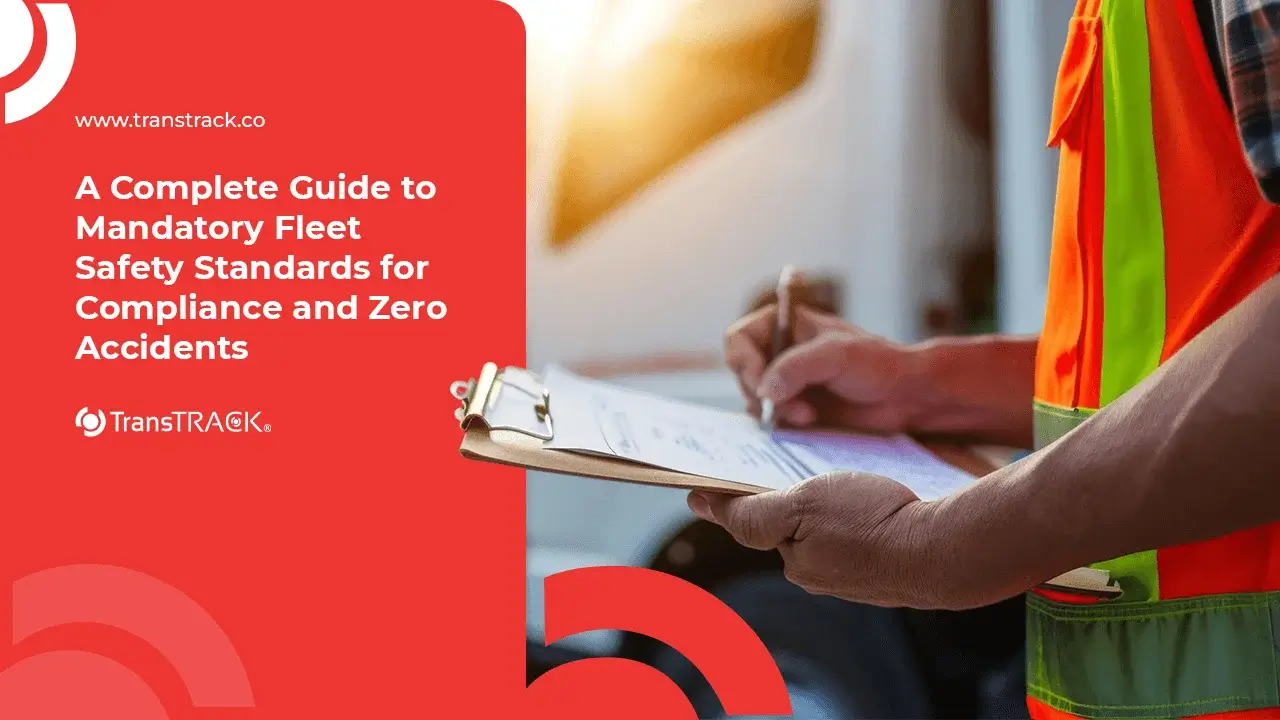
A Complete Guide to Mandatory Fleet Safety Standards for Compliance and Zero Accidents
Posted on December 31, 2025 by Nur Wachda Mihmidati
Fleet safety is not only a moral responsibility but also a legal obligation that directly impacts business continuity. Safety standards extend beyond physical equipment; they must also encompass comprehensive systems, policies, and work culture. Therefore, the effective implementation of fleet safety standards must rest on three main pillars: written policies, ongoing training, and real-time, technology-based monitoring. Get to know more in this TransTRACK article!
Pillar 1: Compliance and Regulatory Policy (Resiliance)
To ensure fleet safety and security, having a written policy document is not merely a formality, but a fundamental basis for regulatory compliance, which must be maintained and updated regularly. Without complete and standardized documentation, companies are vulnerable to legal sanctions and face significant operational risks. Here are some examples of required documents:
Vehicle Licensing Standards
- KIR test documents (inspection and renewal time)
- Valid STNK and vehicle permit
- Consequence: If the KIR (Periodic Vehicle Test) expires or is not renewed, the vehicle is considered legally unroadworthy.
- Increased risk of ticketing by the police, administrative fines, and even vehicle operational bans.
- In a business context, this can also impact customer trust and the potential for insurance claims to be rejected.
Driver Eligibility Standards
- Drug/Alcohol Use Policy: Implementation of zero tolerance rules which do not tolerate certain violations at all, especially those related to safety.
- Any violation will be subject to immediate sanctions without warning.
- Driver’s License Certification: General B1/B2 driving license requirements according to the type of vehicle
- Working hour limits: Implementation of Fatigue Management policy
Pillar 2: Training & Preventive Maintenance
A company’s internal processes significantly impact consistent fleet safety efforts. Regular training for drivers and operational teams helps establish appropriate emergency responses based on established standard safety procedures. Furthermore, scheduled preventative maintenance ensures every vehicle remains in optimal condition and prevents the risk of breakdowns. Here are some internal processes that must be adhered to:
Driver Training Program (Defensive Driving)
- Safe driving techniques, dangers of harsh braking and overspeeding
- The Importance of Driver Scoring as a Safety Performance Evaluation Tool
Vehicle Maintenance Program (Preventive Maintenance)
- Pre-road inspection (P2H) or routine inspection before departure
- Compliance with periodic service schedules based on kilometers or engine hours
- In the context of safety, preventive maintenance is much more ideal because it reduces the risk of accidents and ensures that vehicles are always in safe and optimal condition before use.
Pillar 3: Real-Time Monitoring (The Role of FMS Technology)
To implement comprehensive fleet safety standards, a monitoring system is required that is not only reactive but also proactive and real-time. This is where technologies like TransTRACK’s Fleet Management System (FMS) play a crucial role in directly monitoring operations. With this system integration, companies can identify risks more quickly and take appropriate action before incidents occur.
Monitoring Driver Behavior with Data
- Technology: Use of FMS to record speeding, harsh acceleration, harsh braking, and idling
- Benefit: Provide data-based evidence for follow-up training or sanctions
Early Warning of Engine Condition
- Technology: Sensors to monitor engine temperature, oil pressure, and electrical conditions.
- Benefit: Prevent fatal damage in the middle of the road that endangers the driver and the load.
Geofencing Implementation for Route Compliance
- Objective: Ensure that drivers remain on the designated safe route and do not enter prohibited areas.
Consequences of Not Complying with Fleet Safety Standards
Ignoring fleet safety standards isn’t just a violation, but a real threat to lives, assets, and a company’s reputation. This is why compliance should be a top priority, not an option. Here are some examples of the consequences of not complying with fleet safety standards:
- Legal impact: Sanctions, fines, or revocation of permits due to fatal accidents or incomplete documents
- Financial impact: Increase in insurance costs, medical and treatment costs, costs of loss of cargo or assets
- Reputation Impact: Damage to the company’s image in the eyes of the public and clients.
Conclusion
Compliance with fleet safety standards should be viewed as a strategic investment, not simply an obligation or a cost burden. By implementing modern solutions like TransTRACK’s FMS, companies can improve operational efficiency while minimizing risks in the field. This step is key to achieving sustainable safety and accurate real-time monitoring.
Ready to turn safety policies into action? Use TransTRACK Fleet Management System to monitor your drivers’ compliance in real time. Request a demo now!
FAQ
Who is responsible for fleet safety standards?
The main responsibility lies with the Operational Manager and the K3/HSE Manager, fully supported by top management.
What is the importance of Driver Scoring in safety?
Driver Scoring provides objective scores based on behavioral data (speeding, sudden braking) that serve as the basis for rewards or coaching.
What is the role of top management in fleet safety standards?
Top management plays a vital role in supporting the implementation of safety standards by providing strategic direction and necessary resources.
What are the responsibilities of the Operations Manager regarding fleet safety?
The Operations Manager is responsible for ensuring that the implementation of safety standards is in accordance with established policies and procedures.
How can Driver Scoring data be used to improve safety?
Driver Scoring data is analyzed to identify risks and provide training or corrective action to drivers for safer driving behavior.




Topic :
Recommended Articles