Bahasa Indonesia


Operational Transformation in Mining with the TransTRACK Mining Fleet Management System
Posted on November 4, 2025 by Nur Wachda Mihmidati
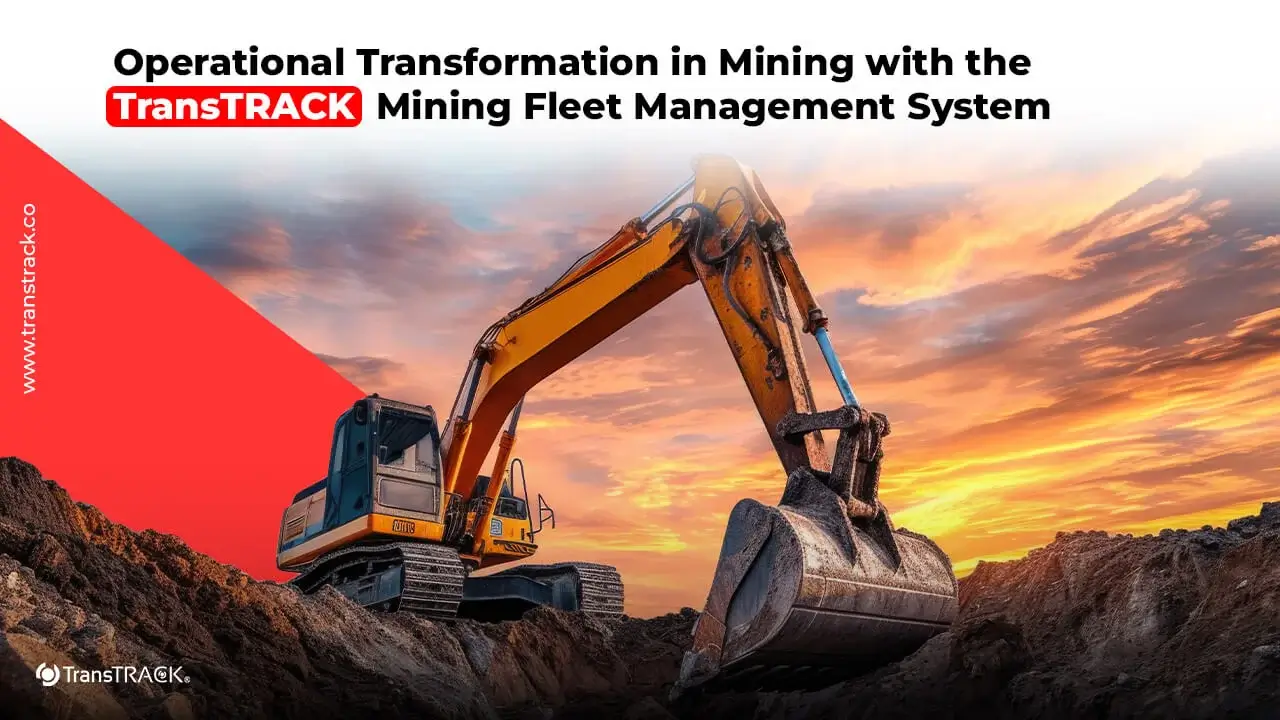
Mining operations have now moved into a digital era that demands efficiency, speed of execution, and accurate data in the field. Amidst the numerous needs of companies to increase production output while reducing costs, a mining Fleet Management System is a key solution, providing full visibility into heavy equipment movement, fuel consumption, and SOP compliance. With this real-time monitoring system, mining companies can manage assets more intelligently, safely, and measurably, to achieve more aggressive operational targets. Get to know more in this TransTRACK article!
What is a Mining Fleet Management System?
A mining fleet management system is a digital solution designed to manage fleets, including heavy equipment and mining logistics, and monitor operational activities in real time. This technology helps companies improve work effectiveness, reduce operational costs, and optimize unit distribution. With a mining fleet management system, companies can monitor unit performance and condition in an integrated manner, all within a single dashboard.
A mining fleet management system serves as an operational control center, providing fast, precise, and accurate access to information. A mining fleet management system plays a crucial role in supporting efficiency and productivity in the field.
Key Challenges in Modern Mining Operations
Mining operations today face significant demands to increase productivity while reducing costs and minimizing the risk of workplace accidents. In this process, mining operations often encounter various obstacles that require appropriate modern solutions to overcome. Here are some examples of the main challenges:
Fuel theft & overconsumption.
- Loss of fuel due to theft in the field.
- Excessive fuel consumption due to uncontrolled work patterns.
- Lack of real-time data on fuel usage per heavy equipment.
Cycle time is not optimal.
- Loading–hauling–dumping times are not balanced.
- Uncontrolled hauling queue.
- There is no automated system to calculate cycle time in real-time.
Heavy equipment collisions & operator safety issues.
- Operator visibility is limited to certain areas.
- Non-compliance with SOP when operating the unit.
- Lack of alarms or proximity sensors to prevent accidents.
Unscheduled maintenance → expensive downtime.
- There is no measurable digital maintenance schedule.
- A sudden breakdown brought production to a halt.
- There is no early warning notification when the component condition is weakening.
Inaccuracy of operational data.
- Manual data is prone to errors & manipulation.
- There is no detailed unit history tracking.
- It is difficult to forecast because the data is not real-time.
Business Impact of Using a Mining Fleet Management System
By utilizing a mining fleet management system, companies can run mining operations more efficiently and accurately. Real-time field data can be used as a basis for strategic decisions, both for daily operations and long-term development. Implementing this system encourages maximum productivity while controlling operational costs.
Business Impact Points:
- OPEX efficiency up to 20–30%.
- Reduction of fuel loss up to X%.
- Increase heavy equipment utilization.
- Reduce unplanned downtime.
- Safety improvement and zero accident program.
- Improve compliance with mining SOPs and regulations.
How Fleet Management Systems Support Mining Company Expansion Strategies
Mining fleet management systems support operational expansion because they are scalable and can be deployed across multiple locations. Integrated data from multiple sources facilitates mine performance analysis for production development. The system also simplifies audits and reporting for industry compliance needs.
Expansion Strategy Points:
- Technology scalability
- Multi-site operational standardization
- Automated reporting & audit readiness
- Big data support for investment decisions (CAPEX)
Determining Factors for the Success of FMS Implementation in the Mining Industry
Implementing a mining fleet management system relies not only on software but also on operator readiness and device integration. When the system can provide accurate, real-time data, heavy equipment management can be optimized. Strong after-sales support further ensures operational sustainability.
Determining Factors:
- High quality sensor & hardware integration
- Easy-to-use software platform
- Data accuracy & real-time analytics
- Operator training and digital SOPs
- After-sales and maintenance support
Conclusion
A mining fleet management system is a gateway to operational digitization that helps companies maintain and improve productivity, cost efficiency, and workplace safety. Implementing this system can drive operational standardization across mining sites on a larger scale. With accurate and precise real-time data management, companies can make strategic decisions more quickly and accurately.
Use TransTRACK’s Fleet Management System for real-time heavy equipment monitoring, fuel efficiency, and measurable productivity improvements. Elevate and transform your company’s operations to the next level with TransTRACK today!
FAQ
What are the benefits of a fleet management system for mining companies?
The benefits of a fleet management system for mining companies include real-time unit monitoring, increased fleet productivity, and reduced operational costs.
How does FMS help save costs in mining?
Fleet Management System helps save costs in mines by reducing fuel loss, optimizing cycle time, and reducing unplanned downtime.
What are the important features of a fleet management system for heavy equipment?
Important features found in fleet management systems specifically for heavy equipment are GPS & geofencing devices, fuel monitoring technology, and regular maintenance scheduling systems.
How much does it cost to implement a fleet management system in a mine?
The cost of implementing a fleet management system in a mine varies depending on the number of units, the level of hardware integration, and of course, the scale of operations.
Can FMS be integrated with other mining systems?
Yes, the fleet management system can perform ERP integration that allows users to synchronize production reports, and supports data exchange API.
Recent Post



Topic :