Bahasa Indonesia


Improving Maritime Operational Efficiency with TransTRACK’s Vessel Monitoring System
Posted on November 11, 2025 by Nur Wachda Mihmidati
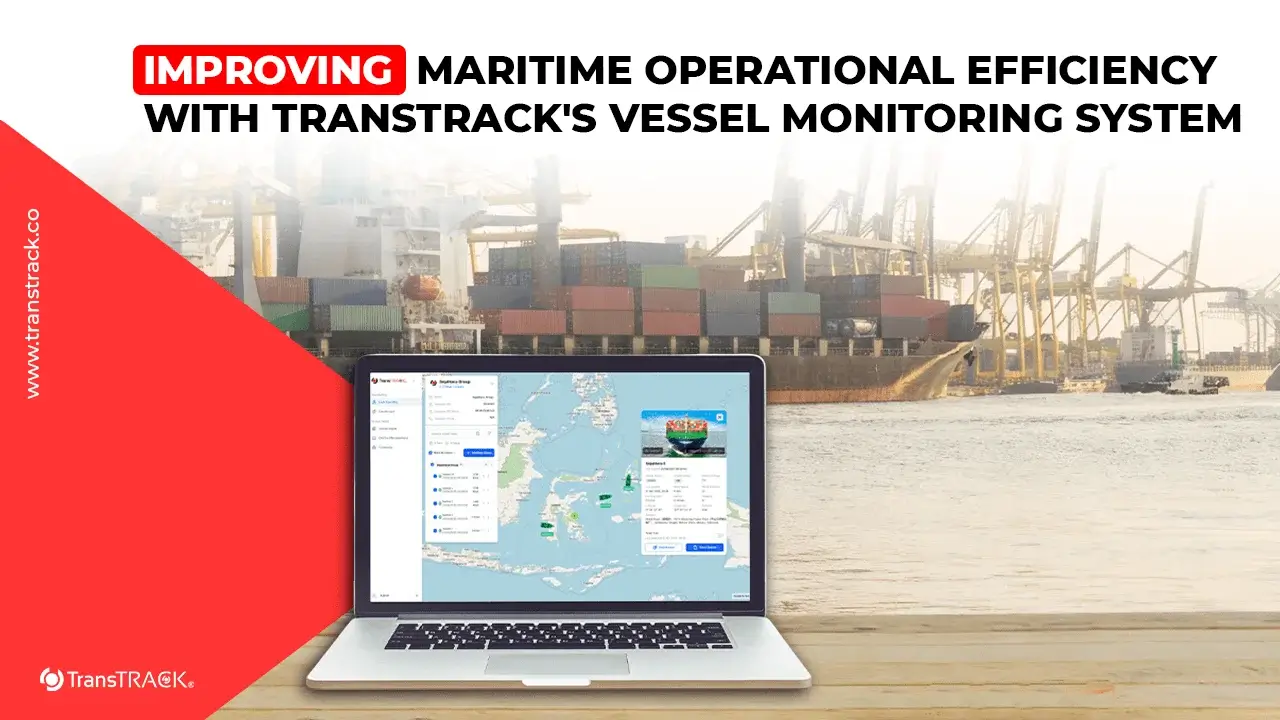
The maritime industry demands speed, accuracy, and efficiency in every process. Amidst intensifying global competition, shipping companies need to implement digital strategies to maintain optimal operational efficiency at ships and ports. With the introduction of the TransTRACK Vessel Monitoring System, fleet management will be easier, more accurate, and more controlled within a single platform.
What is Operational Efficiency in the Maritime World?
Operational efficiency in the maritime world is the ability of ships and ports to operate at maximum performance, at minimal costs, and in optimal time. Improving operational efficiency will help maritime companies reduce expenses and optimize productivity. Furthermore, implementing operational efficiency also means effectively utilizing and maximizing the potential of existing resources.
Factors Affecting Ship Operational Efficiency & Port Operations
The condition of the vessel, work execution systems, and port performance significantly impact operational efficiency. By understanding each component, companies can identify gaps and improve the shipping service chain. Here are some of the key factors affecting operational efficiency in the maritime industry:
Fuel consumption and cruising speed
- Fuel consumption must be measured and according to route requirements.
- Ship speed affects energy efficiency and travel time.
- Speed optimization will drastically improve operational efficiency.
Engine condition and ship maintenance
- Regular maintenance minimizes the risk of engine damage that can hinder your journey.
- Ships with good technical performance and condition result in higher operational efficiency.
- Efficient engines reduce long-term repair costs.
Weather and shipping routes
- Navigation decisions are based on weather conditions. Bad weather can hinder navigation and reduce operational efficiency.
- Safer and shorter routes improve ship operational efficiency.
- Weather prediction technology helps choose low-risk routes.
Coordination between ships and ports
- Fast and precise communication speeds up the process of getting on and off the ship.
- Operational efficiency can be increased if the anchoring schedule is clear and structured.
- A little miscommunication means less waiting time.
Loading and unloading process and berthing time management
- The faster the loading and unloading process, the more efficient the operational costs.
- Docking time management is a key determinant of port operational efficiency.
- Accelerating terminal activities reduces ship queue congestion.
Use of digital technology such as port management system
- Digital technology helps documentation and administration processes.
- Port management system allows ports to monitor real-time activity.
- Digital solutions improve operational efficiency without adding a large workforce.
Collaboration between ports and ship operators
- Data coordination facilitates joint decisions between parties.
- Operational efficiency increases when ports and ship operators collaborate.
- Collaboration accelerates marine logistics distribution.
The Role of Technology in Operational Efficiency
Technology is fundamental to improving operational efficiency across the modern maritime sector. Through digital systems and automated monitoring, ships and ports can operate more quickly and precisely. Here are some examples of technology’s role in improving operational efficiency:
Fleet Management System to monitor fleet.
- Vessel monitoring allows for more precise route control.
- Fleet Management improves operational efficiency with real-time data.
- Ships can be scheduled more effectively in the long term.
Vessel Monitoring System for monitoring ship movements.
- The ship’s position is monitored automatically throughout the journey.
- Vessel Monitoring System improves the operational efficiency of the maritime fleet.
- Accurate location data makes it easier to arrange arrival and docking schedules.
Truck Appointment System to manage schedules at the port.
- The digital queuing system speeds up the gate in & gate out process.
- Prevent terminal congestion and increase logistics operational efficiency.
- Land and ship shipping are becoming more synchronized.
Data analytics for route optimization and business decisions.
- Data analysis helps determine the most efficient path.
- Operational efficiency is increased through data-driven planning.
- Operational insights accelerate service evaluation and improvement.
Practical Strategies to Improve Operational Efficiency
Achieving maximum operational efficiency requires sustained effort and integration across systems. Companies can maximize the entire operational chain, from ships and ports to inland logistics, by implementing the right strategies. Here are some practical strategies to improve operational efficiency:
Digitalization of marine logistics processes and automation.
- Reduce time-consuming manual processes.
- Automation improves operational efficiency with minimal errors.
- Digital documents speed up clearance and administration.
Collaboration between stakeholders (shippers, ports, transporters).
- The integration of multi-party systems accelerates the flow of operational information.
- Operational efficiency increases as all parties work together.
- Reducing information conflicts in the distribution of goods.
Implementation of integrated systems such as TransTRACK Solutions.
- All ship and port processes are automatically connected in one dashboard.
- TransTRACK Solutions helps improve operational efficiency through real-time monitoring systems.
- Business decisions become faster, more accurate and more data-driven.
ROI from Operational Efficiency: Effect on Costs and Productivity
Operational efficiency has a direct impact on reducing fuel costs, ship maintenance, and port berthing costs. Productivity increases because vessels can operate on more precise schedules. With stable operational efficiency, companies are able to increase service output and long-term profitability.
Conclusion
Operational efficiency is the foundation for the sustainability of the modern maritime industry. With the right technology, coordination, and efficiency strategies, shipping and port operations can operate more productively and minimize costs. Investing in operational efficiency not only saves costs but also increases a company’s competitiveness in the future of maritime business.
Improve your fleet’s operational efficiency now with TransTRACK’s Vessel Monitoring System! Monitor vessel movements in real-time, obtain accurate data, and optimize routes and costs with us.
FAQ
What is meant by operational efficiency on a ship?
Operational efficiency on a ship is the ship’s ability to operate optimally at minimal cost. This relates to how the ship is managed, maintained, and controlled, as well as a focus on increasing productivity and saving resources.
Why is operational efficiency important in shipping?
Operational efficiency is important in shipping because with operational efficiency companies can reduce fuel consumption and travel time, increase the company’s profit potential, and increase the speed of marine logistics services.
How to improve efficiency at the port?
Operational efficiency at ports can be achieved through automation of loading and unloading and document digitization, proper scheduling between ships, trucks and terminals, and system integration such as port management systems.
What is the relationship between operational efficiency and ship fuel costs?
The relationship between operational efficiency and ship fuel costs is that the more efficient a ship’s sailing processes, the lower its fuel consumption. Furthermore, optimizing routes and speeds can reduce energy waste and significantly impact annual operating costs.
What are examples of the application of efficiency in modern ports?
Examples of efficiency implementation in modern ports are the use of Truck Appointment System for logistics scheduling, the use of Vessel Monitoring System to control ship movements, and digitalization of port clearance & administration.
Recent Post




Topic :